Friday, November 4, 2022

Jude the Obscure

TOPIC OF THE BLOG:-

This blog is a part of a Thinking Activity given by Dilip Barad Sir (Click here for Dilip Barad sir's Blog Site). In this blog I try to describe Marriage, Class, Women's Position in Victorian age and 'Jude The Obscure' as a Gothic Novel. Here is a link of the Study material website (Click here). 

THOMAS HARDY:-

Thomas Hardy was born on 2 June 1840 in the United Kingdom and died on 11 January 1928 in the United Kingdom. He was an English Victorian novelist, realist and Poet. He was influenced by Romanticism and Romantic Poetry. He has been popular in critics and the public too. In his novels one can find philosophy, Pessimism, Art of Characterization, Art of plot Construction, Humor, His point of you about Love and Marriage and His thoughts towards Nature. Even though he has so many ideas and categories, in most of his works 'Pessimism' is the most notable idea. His physical ill health and rapid advance of industrial life around him cause him so much pain, he gets to know failure, suffering, disappearance and frustration. These all factors are the reason for his Pessimism. 
His works like 'The Mayor of Casterbridge', 'The Return to the Native', 'Tess of the d'Urbervilles' and 'Jude The Obscure' are some examples of his most pessimistic works. He was interested in showing the naked reality of society and life in his works. According to Thomas Hardy, God's are opposed to human beings, and He only wants man and woman to suffer in life. 
Here are some of his notable works:- 
  • A Group of Noble Dames (1891)
  • A Pair of Blue Eyes (1873)
  • Far From the Madding Crowd (1874)
  • Jude the Obscure (1896)
  • Tess of the d'Urbervilles (1891)
  • The Mayor of Casterbridge (1886)
  • The Return of the Native (1878)
  • Under the Greenwood Tree (1872)

JUDE THE OBSCURE:-


Full name:- Jude The Obscure

Writer:- Thomas Hardy 

Genre:- Romance Novel and Fiction 

Published:- Published In an abridged form in Harper’s New Monthly as Hearts Insurgent; published in book form in 1895 (Britannica). 

Setting:- In his fiction Place named Wessex 

Important Characters:- Jude Fawley, Sue Bridehead, Arabella Donn, Richard Phillotson, Little Father Time, Aunt Drusilla. 

ARTICLES ON 'JUDE THE OBSCURE':-

πŸ„Mark Schauer's article with the title 'Thomas Hardy's Jude the Obscure':-

In this article firstly he described the point of view of 'Gossin' that according to  Gossin, Hardy’s 1895 novel Jude the Obscure, “fashioned a fictional narrative mode that closely resonates with what Alan Velie has identified as, ‘perhaps the most common form of narrative in modern fiction’— ironedy”.  It is remarkable here that indeed Hardy's work reflects reality and in the most common form of narrative, Hardy simultaneously transformed both the gothic and bildungsroman genres of literature. Schauer considers 'Jude The Obscure' as a Gothic Novel and Jude as a Gothic hero. Further with the point of view of Kraft he try to describe Gothic, Kraft argues that, “The gothic revival is represented as an ideologically motivated phenomenon used in service of exclusionary social hierarchy and religious dogma, and Jude and Sue’s work as Victorian artisans fueling this medievalism makes them, finally, complicit in their own tragedy”. In this article further he compares the status of women and men in Gothics, according to him Jude, on the other hand, was the first convincingly heterosexual man in the genre to explicitly fall victim to a patriarchal society. To compare gender in Hardy's novel, one can find male and female characters equal in most ways. (For more on this article visit the site of ResearchGate - Click here)

πŸ„Greg Buzwell's article with the title 'An introduction to Jude the Obscure':-

Apart from other articles this article contains  information about how Hardy used Education, Class, hypocrisy of late Victorian Society, Marriage and New Women. Further he describes, The novelist H G Wells in an unsigned piece for the Saturday Review eulogised ‘There is no other novelist alive with the breadth of sympathy, the knowledge or the power for the creation of Jude’. Buzwell gives a point that how Influence this novel in Victorian Society by this incident, The Bishop of Wakefield went even further, being reputedly so disgusted by the novel he threw his copy into the fire. This is interesting to see even In this time some modern critics and people are not ready to accept this novel as a good work of art cause it reflects the reality of society. In the point of Education Buzwell describes the status and condition of Jude. He wants to study but the University rejects his application and also the point of Class University suggests to him that working class people should remain in the working class. In a role of women and marriage describe two female characters that show how both female characters are different from each other. How Sue Bridehead supports her financial status as teacher and his viewpoint to the Marriage. 

(For more on this article visit the site of British Library - Click here)

ADAPTATIONS OF JUDE THE OBSCURE:-

🌷JUDE THE OBSCURE (1971):-

This is a series was released on BBC two based on Thomas Hardy's novel 'Jude The Obscure'. This series released on 6 February – 13 March 1971. Director of this series is Hugh David and written by Harry Green. This series divided into 6 episodes with the title as follow:-

  1. At Marygreen
  2. To Christminster
  3. To Melchester
  4. To Shaston
  5. To Aldbrickham
  6. Christminster Again

Cast of the Series are Robert Powell as Jude Fawley, Fiona Walker as Sue Bridehead, Alex Marshall as Arabella Donn, Daphne Heard as Aunt Drusilla Fawley, John Franklyn-Robbins as Richard Phillotson and others. 

🌷 JUDE (1996):-

This movie is based on Thomas Hardy's novel 'Jude The Obscure' in 1996 Directed by Michael Winterbottom, Produced by Andrew Eaton. Cats of the movie are Christopher Eccleston as Jude Fawley, Kate Winslet as Sue Bridehead, Liam Cunningham as Phillotson, Rachel Griffiths as Arabella, June Whitfield as Aunt Drusilla and others. 

🌷HARDY'S WOMEN (2020):-

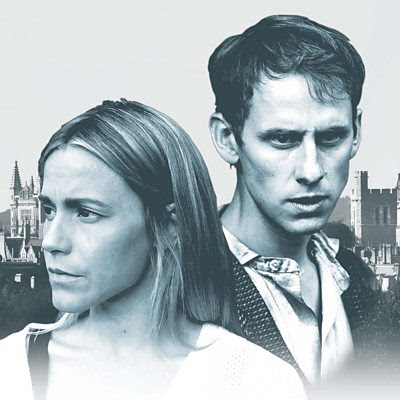
Apart from Thomas Hardy's novel 'Jude The Obscure' other adaptations this focuses on women Character of Novel. This television program based on Thomas Hardy's 'Jude The Obscure' released on BBC Radio 4  in 3 episodes, 1 on 30 may, 2021, 2 on 6 June, 2021 and 3 one on 13 June, 2021. Directed by Emma Harding and cast are Kirsty Oswald as Sue Bridehead, Robert Emms as Jude Fawley, Linor Coleman as Arabella Donn, Julius D’Silva as Phillotson, Jane Slavin as Aunt Drusilla and others.

NOTE:- If you find any problem or question or suggestions please let me know ☺️ some of the information is collected from different sources, books and websites. 
Words:- 1,116
Photos:- 5

Thursday, November 3, 2022

Importance of Being Earnest

TOPIC OF THE BLOG:- 

This blog is a part of a Thinking Activity given by Dilip Barad Sir (Click here for Dilip Barad sir's Blog Site ). In this blog I tried to give justice to the comedy Play Importance of Being Earnest by Oscar Wilde. 

OSCAR WILDE:-

Oscar's full name is Oscar Fingal O'Flahertie Wills Wilde and also known as Sebastian Melmoth. He was born on 16 October 1845 in Dublin, Ireland and died on 30 November 1900 in Paris, France. He was an Irish Poet and Playwright.He was a spokesman for the late 19th-century Aesthetic movement in England, which advocated art for art’s sake, and he was the object of celebrated civil and criminal suits involving homosexuality and ending in his imprisonment (1895–97). (Beckson) 
Here are some of his famous works:- 
  • A Woman of No Importance
  • De Profundis
  • Intentions
  • Lady Windermere’s Fan
  • Poems
  • Ravenna
  • SalomΓ©
  • The Ballad of Reading Gaol
  • The Happy Prince and Other Tales
  • The Importance of Being Earnest 
  • The Picture of Dorian Gray
  • An Ideal Husband
  • Dimensions
  • The Canterville Ghost
  • A House of Pomegranates
  • The Duchess of Padua
  • Vera; or, The Nihilists
  • The Model Millionaire
  • A Florentine Tragedy
  • The Remarkable Rocket
  • The Star-Child
Wilde was born of professional and literary parents. His father, Sir William Wilde, was Ireland’s leading ear and eye surgeon, who also published books on archaeology, folklore, and the satirist Jonathan Swift. His mother, who wrote under the name Speranza, was a revolutionary poet and an authority on Celtic myth and folklore. (Beckson)
IMPORTANCE OF BEING EARNEST:-
The Importance of Being Earnest, has a full name; The Importance of Being Earnest: A Trivial Comedy for Serious People. It's written by Oscar Wilde and it's a three act play first played on 14 February, 1895. 
CHARACTERS OF THE PLAY:- 
There are so many Important Characters in this play:-
  • John "Jack" Worthing
  • Algernon Moncrieff
  • Gwendolen Fairfax
  • Cecily Cardew
  • Lady Augusta Bracknell
  • Miss Laetitia Prism
  • Dr. Frederick Chasuble
  • Lane
  • Merriman
πŸ‚JOHN "JACK" WORTHING:-
John is a protagonist of the play and is in love with Gwendolen Fairfax. From this line one can find that he comes this time to propose to her; "I am in love with Gwendolen". I have come up to town expressly to propose to her. Jack was discovered in a handbag in the cloakroom of Victoria Station by an old man who adopted him and subsequently made Jack guardian to his granddaughter, Cecily Cardew, at last this secret was revealed by Miss Prism. He lives a double life, first one as Jack in the country and as Earnest in the city. As a guardian to Cecily, he’s used to setting down rules, even guiding curriculum. He is more serious about keeping up his air of respectability. Wilde describes Jack's reaction as "irritable" three times in the play: when Algernon rushes him, when Lady Bracknell quizzes him on Cecily’s background, and when the same lady can’t remember his father’s first name. Jack is attracted to Gwendolen, a sensible, intellectual girl. Gwendolen is a sophisticated city woman, and her style and education make her desirable to Jack. 
πŸ‚ALGERNON MONCRIEFF:-
Second hero of the play. Algernon is brilliant, witty, selfish, amoral, charming, idle, decorative bachelor, nephew of Lady Bracknell, cousin of Gwendolen Fairfax, and best friend of Jack Worthing. He has invented a fictional friend, Bunbury. In An Ideal Husband, the play Wilde wrote just before this one, a similar character appears. This character, Lord Goring, even has a scene with his butler that resembles Algernon's first scene with his butler, Lane. Wilde wrote that Lord Goring 'plays with life,' and the same can be said of Algernon. His character and thought for women reflects in his dialogues; "Well, in the first place girls never marry the men they flirt with. Girls don’t think it right." He is in love with Cecily Cardew, the ward of Jack Worthing. 
πŸ‚GWENDOLEN FAIRFAX:-
Gwendolen is Lady Bracknell's daughter and cousin of algernon. She desires nothing but to marry someone named Ernest. Gwendolen is in love with Jack, whom she knows as Ernest. She is sophisticated, intellectual, cosmopolitan, and utterly pretentious. Gwendolen also has strong ideas about social protocol like her mother. She thinks Cecily is a country girl who doesn't know anything. We can see that in these dialogues of both; Cecily:- "Do you suggest, Miss Fairfax, that I entrapped Earnest into an engagement? How dare you? This is no time for wearing the shallow mask of manners. When I see a spade I call it a spade." Gwendolen:- "(Satirically) I am glad to say that I have never seen a spade. It is obvious that our social spheres have been widely different."
πŸ‚CECILY CARDEW:-
She is the granddaughter of the gentleman who found Jack when he was baby, and she is also a ward of Jack.  Like Gwendolen, she is also obsessed with the name Ernest. In her diary, she makes long entries recording romantic events that are entirely fictional. Cecily:- Worn out by your entire ignorance of my existence, I determined to end the matter one way or the other, and after a long struggle with myself I accepted you under this dear old tree here. The next day I bought this little ring in your name, and this is the little bangle with the true lover's knot I promised you always to wear. Algernon:- Did I give you this? It's very pretty, isn't it? When she and Gwendolen get confused over the Jake, Algernon and Earnest name, they both talk with each other as a revival but when they both get to know that the name of the both people are not Earnest they get in one team. Gwendolen:- I felt there was some slight error, Miss Cardew. The gentleman who is now embracing you is my cousin, Mr. Algernon Moncrieff. Cecily:- [Breaking away from Algernon.] Algernon Moncrieff! Oh! [The two girls move towards each other and put their arms round each other’s waists as if for protection.] Cecily:- Are you called Algernon? Algernon:- I cannot deny it. Cecily:- Oh! Gwendolen:- Is your name really John? Jack:- [Standing rather proudly.] I could deny it if I liked. I could deny anything if I liked. But my name certainly is John. It has been John for years. Cecily:- [To Gwendolen.] A gross deception has been practised on both of us. Gwendolen:- My poor wounded Cecily! Cecily:- My sweet wronged Gwendolen! Gwendolen:- [Slowly and seriously.] You will call me sister, will you not? [They embrace. Jack and Algernon groan and walk up and down.] 

WORKS CITED:-

In this blog I try to Cover up Four main Characters of the play.  

Note:- If you find any problem or question or suggestions please let me know ☺️ some of the information is collected from different sources, books and websites. 
Words:- 1,151
Photos:- 3

Assignment - 1 - Death, be not Proud by John Donne

TOPIC OF THE BLOG:-

This blog is part of an assignment for the paper 101 - Literature of the Elizabethan and Restoration Periods, Sem - 1, 2022.


'DEATH, BE NOT PROUD' BY JOHN DONNE

TABLE OF CONTENTS:-

  • Personal Information
  • Assignment Details
  • Abstract
  • Keywords
  • Introduction
  • John Donne
  • 'Death, be not Proud' 
  • Milton and Donne
  • Relation between John Donne and 'Death'
  • Reflection of 'Death' in Donne's other Poems 
  • Why are his most Poems are on 'Death'?
  • Works Cited

PERSONAL INFORMATION:-

Name:- Pooja Anilbhai Bhuva

Batch:- M.A. Sem 1 (2022-2024)

Enrollment Number:- 4069206420220005

E-mail Address:- poojabhuva2002@gmail.com

Roll Number:- 17

ASSIGNMENT DETAILS:-

Topic:- 'Death, be not Proud' by John Donne 

Paper & subject code:- 101 - Literature of the Elizabethan and Restoration Periods & 22392

Submitted to:- Smt. Sujata Binoy Gardi, Department of English, MKBU, Bhavnagar 

Date of Submission:- 7th November, 2022

About Assignment:- In this assignment I try to define death according to John Donne with reference to his poem 'Death, be not Proud'.

ABSTRACT:-

John Donne, a name who gave us a totally different meaning and point of view to look at 'Death'. Almost every poem by him has a little reflection or point of 'Death' and he was best in it. He went through so many obstacles in his life. He witnessed so many deaths of his own loved ones. He also challenges 'Death' but believes in fear of it too. He believes in the afterlife and has so much faith in God and thinks that through following his religious rules and thoughts he can run from 'Death'. In his 'Death, be not Proud' he in clear words challenges 'Death' and considers 'Death' like nothing. Milton was also influenced by his thoughts and point of view on 'Death' and his Metaphysical Poems. Not only in this Poem but in his Holy Sonnets which has nineteen Poems in it most of it has a glimpse of 'Death' and some are directly about 'Death'. Through his point of view on 'Death' and it's description in his Poems one can see his belief towards God and Afterlife. His 'Holy Sonnets' have Biblical allusions and references. 'Holy Sonnet: Since she whom I lov'd hath paid her last debt' and 'A Valediction: Forbidding Mourning' described about 'Death' of his beloved and favourite ones. If one can read his Holy Sonnets, one can say that he has some obsession with 'Death'. The word Metaphysical came to be used for Donne's Poetry. Indeed he was and is one of the greatest Metaphysical Poets.

KEYWORDS:-

Death, Proudness, Religion, Sleep, Metaphysics, God 

INTRODUCTION:-

"One short sleep past, we wake eternally

And death shall be no more; Death, thou shalt die." (Donne)

- John Donne

Death, it is a word which was truly defined by John Donne in his time which impacted us in this era also. Death is something that we can't ignore but Donne challenges that 'Death' is nothing to us. In his Holy Sonnets one can find His Love towards God, His nature to challenge Death, Personal emotions and many more elements. 

Holy Sonnets, also called Divine Meditations or Divine Sonnets, series of 19 devotional poems by John Donne that were published posthumously in 1633 in the first edition of Songs and Sonnets. (Britannica) This assignment includes Information and Understanding of The Holy Sonnet 10 and which are other elements, Situation, emotions, and feelings made him write this kind of highly influenced Metaphysical Poems and Sonnets. What his inner self told him can be reflected in his Poems and his life also reflects that why he challenges 'Death' and believes in the afterlife. Not only this poem but in other poems too one can find his belief in 'Death'. 

JOHN DONNE:-

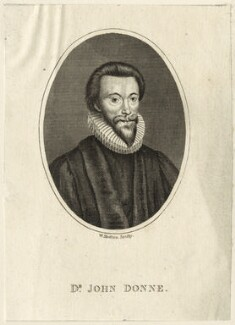
(Skelton)

John Donne was born in 1572, London, England and died on March 31, 1631, London. He was a leading poet of Metaphysical Poets, considered as the preeminent writer of his time, greatest love poet of the English language and cleric in the church of England. He is also noted for his religious verse and treatises. He was in the era of jacobean age. They are many notable works in his name like 'A Valediction: Forbidding Mourning', 'Anniversaries', 'Batter My Heart' 'Biathanatos', 'Death, Be Not Proud', 'Devotions upon Emergent Occasions', 'Holy Sonnets', 'Paradoxes and Problems', 'Pseudo-Martyr', 'Songs and Sonnets', 'The Canonization', etc. His poetry was re-evaluated by T.S. Eliot and other poets in modern times. He also wrote Prose and this a Collection of Letters, 'Letters to severall persons of Honour' in 1651. 

Donne was born of Roman Catholic parents, and his father was a prosperous London merchant. Donne was the third of six children. Donne was four when his father died, and then he was raised by Dr. John Syminges, his stepfather who was a wealthy widower with three children of his own. Donne was educated privately; however, there is no evidence to support the popular claim that he was taught by Jesuits. In 1583, at the age of 11, he began studies at Hart Hall now Hartford college, Oxford he studied there for three years and then at the University of Cambridge for another three years but because he was a Roman Catholic, he didn't want to pursue a degree from the protestant queen Elizabeth. (Pinka) 

Donne's work is often preoccupied with Death, both as a personified force of nature and as a transitional moment in the experience of humanity. His famous Holy Sonnet 10 (Death, be not Proud) gives Donne's most complete view of the nature of death in the universe. Death is an instrument of God to move his people from frail earthly existence to glorified eternity with him. Thus, Donne sees Death as having an unwarranted reputation of terror among humans. 

In his Holy Sonnets first twelve poems can be grouped by subject matter into two series—six on the subject of death and judgment and six on God’s love for humankind and the human obligation to love God and others in return. (Britannica)

T.S. Eliot says that; 

"A thought to Donne was an experience, it modified his sensibility."

'DEATH, BE NOT PROUD':-

This poem is also known as Sonnet 10 and published posthumously. This Poem includes fourteen lines in it. 

Death, be not proud, though some have called thee

Mighty and dreadful, for thou art not so;

For those whom thou think'st thou dost overthrow

Die not, poor Death, nor yet canst thou kill me.

From rest and sleep, which but thy pictures be,

Much pleasure; then from thee much more must flow,

And soonest our best men with thee do go,

Rest of their bones, and soul's delivery.

Thou art slave to fate, chance, kings, and desperate men,

And dost with poison, war, and sickness dwell,

And poppy or charms can make us sleep as well

And better than thy stroke; why swell'st thou then?

One short sleep past, we wake eternally

And death shall be no more; Death, thou shalt die. (Donne)

Poet:- John Donne 

Rhyme Scheme:- ABBA ABBA CDDC EE

Written:- 1609

Published:- 1633

Genre:- Religious Poetry 

'Death, be not Proud' in the first line of the poem one can see that he challenges Death and says that 'Death' don't be so proud of yourself, you are nothing, further in the poem he says that though everyone calls you mighty and fears you, but in reality you are not. Those you take with you do not die, poor death, and you cannot kill me too. The sleep we get every night is actually much more pleasurable and peaceful than your sleep after Death. The people whom you take with you, only the body you take, not their soul. Through this line one can find Metaphysical elements in this poem. 'Death' You are slave, slave to Fate, Kings, Poison, War, and Sickness, You don't have any strong reason for taking us with you, you just want a chance. Poppy (opium) or Charms can give us better sleep than you. In the last lines of the poem he says that okay, we sleep for some time but then what? We wake again and transfer to another body, our soul never dies. So, 'Death' you die not our soul, You die.  

In this poem he described 'Death' as a little thing. Death is nothing in front of us and in front of our sleep. He compares opium and Death and describes that the sleep by the opium is better than sleep by the Death.

MILTON AND DONNE:-

Sir Walter Raleigh made sixty years ago remains undisputed, "As for the great dean of St. Paul's, there is no evidence that Milton was touched by him, or, for that matter, that he had read any of his Poems." There is, however, at least one significant link between the poets which has been overlooked: Milton's verses 'On Time' indicate that he read and was 'touched' by Donne's 'Death, be not Proud.' This point of contact is particularly revealing because it illuminates the 'temperamental antagonism' between Milton and Donne which critics have deduced. 

Further in this article, Frederic B. Tromly described that one reason the link between the two poems has escaped notice is that the clearest evidence for it does not appear either in the fair copy of 'On Time' in Milton's notebook or in the text he printed in the Poems of 1645. There is in the Bodleian Library, however, a manuscript containing a version of the poem in which the conclusion differs from that of the Trinity manuscript and the Poems. The last line of the Bodleian text clearly appropriates the final line of 'Death, be not Proud':

And death shall be no more; Death, thou shalt die.

- Donne 

Where death and Chance, and thou O tyme shall be noe more.

- Bodleian MS (Tromly)

RELATION BETWEEN JOHN DONNE AND 'DEATH':-

In his article ‘I am every dead thing’: John Donne and death by Andrew Dickson he wrote that John Donne’s writings are death-obsessed. Poem after poem is haunted by the theme of mortality and many of his letters and prose works explore the subject. Among the awesome variety of subjects Donne tackled in a tumultuous life, death was one he continually, compulsively returned to. As his famous ‘Nocturnal upon St Lucy’s Day’ phrases it, ‘I … am the grave / Of all that’s nothing. 

In this, the tenth of his so-called ‘Holy Sonnets’, Donne boldly appropriates a verse form associated with love poetry and refocusses it on the figure whom Christians are meant to love more passionately than anyone else – God. 

Further in this article Andrew Dickson described 'Death, be not Proud' in a different way than I described. He described that the address in ‘Death be not proud’ is aggressively personal, imagining Death as if it were a real, flesh-and-blood individual. Again, the argument is vigorously pursued, asserting that the narrator’s Christian belief will save him from death and bring him to eternal life, along with everyone else who believes: Thou art slave to fate, chance, kings, and desperate men, And dost with poison, war, and sickness dwell. (Dickson)

REFLECTION OF 'DEATH' IN DONNE'S OTHER POEMS:-

In Poem 'A Valediction: Forbidding Mourning' By John Donne in first two lines he described about a person who just died and whispered to their soul to go. Here he directly tells about Death without using any metaphor or paradox. 

As virtuous men pass mildly away,

   And whisper to their souls to go,

Whilst some of their sad friends do say

   The breath goes now, and some say, No. (Donne)

In his 'Holy Sonnet: Since she whom I lov'd hath paid her last debt' (Holy Sonnet 17) he told us about his beloved that she paid her last debt means she died and her soul goes to heaven. Through these lines it's clear that he has relation with Death that's true but he also believes in the afterlife and has so many faith in God too. 

Since she whom I lov'd hath paid her last debt

To nature, and to hers, and my good is dead,

And her soul early into heaven ravished,

Wholly in heavenly things my mind is set. (Donne)

WHY ARE HIS MOST POEMS ARE ON 'DEATH'?:- 

In the article, The Concept of Death in John Donne and Sohrab Sepehri:A Comparative Study by Behnam Mirzababazadeh Fomeshi got the point that maybe because of this he was influenced by Death and always tries to write on 'Death'. He wrote that Donne experienced many personal tragedies. He was born into a terror. In 1576 his father died when the son was only four. In 157, his sister Elizabeth died, followed by two more of his sisters, Mary and Katherine, in 1581. Before the future poet was ten years old he had thus experienced the deaths of four of his immediate family. His brother had died of a fever in prison after harboring a Roman Catholic priest, and an uncle, a Jesuit, washanged, castrated, disemboweled, and quartered. Queen Elizabeth's Government, though by contemporary standards tolerant, still uniformly burdened Catholics with harassment and financial penalties. This fact may be one of the underlying reasons for Donne's "religious doubts''. Five of his twelve children died during birth or infancy. Donne endured his wife Ann's miscarriages, and in 1617 her own death at the age of thirty-three (Greenblatt et al, 2006, p. 1261), just a year after he took his first parish job. In his funeral sermon for her, he preached from Lamentations, "I am the man that hath seen affliction". (Fomeshi)

WORKS CITED:-


Words:- 2,465

Image:- 2


Tuesday, October 25, 2022

Presentations - Sem - 1 (2022)

TOPIC OF THE BLOG:-

This blog contains information and details about presentations which I gave, Topics I chose and other things about it. 

PRESENTATIONS:-

This is my first experience of Presentation. 2 years ago I was totally afraid to say two words in English on the stage but in these months I learnt so much. Now I can speak English more fluently. I gave my 5 presentations in English. Of course I made so many mistakes but it's better than before.

Whole Presentation arranged by Dilip Barad Sir (Click here for Dilip Barad's Blog Site). 

Here is my another blog on presentation which describes how presentations are arranged and go live on YouTube with the help of stream yard and other details (Click here).


1 - PRESENTATION:-

🌱 In my first presentation from the paper 101 - literature of the Elizabethan and Restoration period, unit 4 - Metaphysical Poetry, I choose the topic 'The Collar' poem by George Herbert and gave title 'The Collar Unbroken' to my presentation. 

🌱 In first slide I gave topic of the presentation, from which paper I am going to discuss and place where I am going to present. 

🌱 In second slide I gave personal information like my full name, enrollment number, email ID, batch, date, subject code and roll number. I also attached a gif related to this and also give credit to the original gif channel. 

🌱In third slide I gave the information about Poet of the poem. I cited the Information from the authentic sources and also cited images or paintings which I embedded. 

🌱In fourth slide I give the information about poem in same with the citations. 

🌱 In fifth slide I decided the main idea of the poem with the help of shapes. 

🌱 In next slide I described about what the poet think about his poem, some other information about the poem and citations.

🌱In next slide described various themes of the poem. 

🌱Next two slides gave information about citations. 

🌱 In last slide I end up with not only thank you but with a related quote and my Email. 

🌱Here is a video recording on my YouTube Channel:-


2 - PRESENTATION:-

🌱In my second Presentation from the Paper 102: Literature of the Neo-classical Period, unit 4 - Samuel Richardson’s Pamela or Virtue Rewarded, I choose the topic Pamela's Comparison with Shamela (novel by Henry Fielding) and gave title 'Pamela or Shamela'.

🌱As upon in first slide, it's included place, paper and topic.

🌱Second slide included my Personal Information. 

🌱 In third slide I give information about two authors. First one is Samuel Richardson and the second is Henry Fielding. 

🌱In fourth slide I gave the information about 'Pamela'.

🌱 In fifth slide I gave information about 'Shamela'.

🌱Next slide has Comparison of Characters of the both novel. 

🌱Next two slides included comparison of the both novel. 

🌱In this slide I gave information about other novel which is rivalry work of 'Pamela'.

🌱 In this slide I gave my opinions on the rivalry. 

🌱 Next two slides included information about works Citation. 

🌱 And last slide has thank you with my Email ID and a related quote to the Presentation.

Here is a video recording on my YouTube Channel:-


3 - PRESENTATION:

🌱 In my third presentation from the Paper 103: Literature of the Romantics, unit 3 - Wordsworth and Coleridge, I choose the topic of criticism, Theory of Imagination by Coleridge, and gave title 'Coleridge's Theory of Imagination'.

🌱 First, Second, Eighth and Ninth slides are same as above I described.

🌱Third slide has the information about Coleridge.

🌱 Fourth slide included information about idea of Theory of Imagination and divisions of it given by Coleridge. 

🌱 Next two slides included detailed information about Primary imagination, Secondary Imagination, Esemplastic Imagination and difference between Fancy and Imagination.

🌱 In this slide I gave my opinions and relation that how Imagination work in our life. 

Here is a video recording on my YouTube Channel:-


4 - PRESENTATION:-

🌱In my Fourth Presentation from the Paper 104: Literature of the Victorians, unit 4 - Tennyson and Browning, I choose the topic Browning's Poems and gave the title 'Insights of Browning's Poems'.

🌱 First, Second, Ninth and Tenth slides are same as above I described.

🌱 In Third slide I gave the information about the Poet Robert Browning. 

🌱 In fourth slide I described that how and why we like Browning's Poems. 

🌱In this slide I described about love according to Browning.

🌱 In next slide it has clue that what and how Browning inspired us for our Desire an Achievements. 

🌱 In this slide I described that how easy his poetry to understand and read. 

🌱 In Third last slide I gave an opinion of other that what he thinks about Browning's Poems.

Here is a video recording on my YouTube Channel:-


5 - PRESENTATION:-

🌱In my fifth and last Presentation from the Paper 105A: History of English Literature – From 1350 to 1900,(I didn't choose from perticular unit), I choose the topic and gave title 'Influence of poetry on poets and writers'.

🌱First, Second, Eleventh, Twelfth and Thirteenth slides are same as above I described.

🌱 Third slide described about the word Influence meaning.

🌱 Fourth slide described about Poetry from ancient to modern, how it is remembered. 

🌱Fifth and Sixth slide described about Influence of poetry on poets.

🌱In next slide I described about two songs from Plays by Shakespeare.

🌱Next two slides has information about Influence of poetry on philosophers and critics.

🌱 Next slide described that how poetry influences on myself and The little Poetry given in this slide written by me and also two pics are clicked by me.

Here is a video recording on my YouTube Channel:- 


NOTABLE POINTS FOR BETTER PRESENTATION:-

πŸ…Use Authentic sites like Britannica, JSTOR, ResearchGate, Poetry Foundation which has good and well positioned writers or professors and avoid website like Wikipedia, Ukeassay, which don't have good Writers. 

πŸ…Use not only words use GIF, Images, Diagrams, and Shapes related to topic. 

πŸ…Use Articles for better Presentations. 

πŸ…Use 7 to 15 Slides in one Presentation. 

πŸ…Complete your Presentation in 15 minutes maximum and 5 minutes minimum.

πŸ…Use slides according to theme for better Presentations.

πŸ… It is better if we ourselves made GIF, Poetry and other things related to Presentations, in short involve yourself in Presentations.

πŸ… It is better if we included a slide on what we think about our presentation or topic which we choose for our presentation, in short our personal opinion.

πŸ… Avoid the search results in citations like Shelley, Percy Bysshe. "Love's Philosophy By Percy Bysshe Shelley". Poetry Foundation, 1819, https://www.google.com/url?sa=t&source=web&rct=j&url=https://www.poetryfoundation.org/poems/50262/loves-philosophy&ved=2ahUKEwiB54OF5ID7AhWzzzgGHc_FBz0QFnoECBgQAQ&usg=AOvVaw2Kf2lCou2kInOrJL9l1BCZ


Note:- If you find any problem or question or suggestions please let me know☺️.

Words:- 1175

PPTs:- 5

Image:- 1