Saturday, November 11, 2023

Globalization and The Future of Postcolonial Studies (Ania Loomba - 2nd Edition of Colonialism/Postcolonialism)

TOPIC OF THE BLOG:-
This blog is a part of a task given by Dilip Barad Sir from The English Department, MKBU, Bhavnagar. For more information about other writers, Poets, Poems and related topics visit this Blog site of Dilip Barad Sir (Click here). In this blog I am going to discuss the point of view of mine or what I understand in Postcolonial Studies, Globalization and The Future of Postcolonial Studies. To read other half part of this blog The Future of Postcolonial Studies (Ania Loomba - 3rd Edition of Colonialism/Postcolonialism) (Click here).


WHAT IS POSTCOLONIAL STUDIES?
According to Cambridge Dictionary Postcolonial means it is a from or relating to the period after colonialism. Postcolonial studies explore how colonialism has shaped and continues to influence these aspects. 
Certainly, postcolonial studies is a multidisciplinary field that emerged in the mid-20th century and has gained significant prominence in academia. Here's more detailed information:

1. HISTORICAL CONTEXT:- Postcolonial studies arose as a response to the end of colonial rule in various parts of the world. It examines the complex dynamics of power, domination, and resistance that characterized the colonial period and its aftermath.
2. SCOPE:- While it primarily focuses on the former colonies of European powers like England, France, Spain, and others, it also encompasses the study of indigenous and marginalized cultures within these colonies.
3. KEY THEMES:- Postcolonial studies explore a wide range of themes, including:
  • IDENTITY AND HYBRIDITY:- It looks at how colonialism influenced the formation of hybrid identities, where people often adopt elements of both their indigenous culture and the culture of the colonizer.
  • LANGUAGE AND LITERATURE:-  Scholars in this field analyze how language and literature have been used as tools of both oppression and resistance. They also examine postcolonial literature to understand how it reflects the colonial experience.
  • NATIONALISM AND INDEPENDENCE MOVEMENTS:- Postcolonial studies often explore the role of nationalism and the struggle for independence in the decolonization process.
  • GLOBALIZATION AND NEOCOLONIALISM:- It investigates how global economic and political forces continue to affect former colonies and perpetuate neocolonial relations.
4. PROMINENT THINKERS:- Notable scholars in postcolonial studies include Edward Said, Frantz Fanon, Homi K. Bhabha, Gayatri Chakravorty Spivak, and many others. Their works have been influential in shaping the field.
5. GEOGRAPHICAL FOCUS:- While it began with a focus on countries in the Caribbean, Asia, South America, and Africa, postcolonial studies has expanded to include other regions and diasporic communities affected by colonialism.
6. INTERDISCIPLINARY APPROACH:- Postcolonial studies is interdisciplinary, drawing from fields such as literature, history, anthropology, sociology, political science, and cultural studies to provide a comprehensive understanding of colonial legacies.
7. IMPACT:- This field has had a significant impact on reshaping how we view the legacy of colonialism, both in academia and in broader discussions of social justice and global inequality.
In essence, postcolonial studies provides a critical lens through which scholars and activists analyze the enduring effects of colonialism and work towards a more equitable and just world. (Generated from Chat GPT)
If we consider the role of globalization in postcolonialism, one might argue that globalization can be seen as a continuation of colonialism. One could argue that in the present era, colonialism no longer exists, and there may be no need for postcolonialism. However, scholars like Ania Loomba contend that the concept of postcolonialism remains relevant in today's world, and one can perceive it in the context of globalization.

GLOBALIZATION AND THE FUTURE OF POSTCOLONIAL STUDIES (ANIA LOOMBA - 2ND ED. OF COLONIALISM/POSTCOLONIALISM)

GLOBALIZATION:-
As Postcolonial Studies came after Colonialism, Globalization shares historical connections with Postcolonial Studies too. Though Globalization is a contemporary idea and it emerges mostly in the 20th century, both share Power, Cultural and Economical connection and development. 

9/11 ATTACK AND EMPIRE
This article started with the remembrance of the 11 September, 2001 events of global war on terror. But before that here is a video available on YouTube which gives the answers like What is 9/11? Who planned this attack? How is it executed? What is the outcome of 9/11? What is War on Terror? How innocent Muslims and Sikh suffer because of that?
In this Article by Ania Loomba she claims that this war on terror effects on Global level and these violent events happening in the name of War on Terror are also part of the phenomenon we think of as Globalization. Normally, we see colonialism with the context of European Colonialism but defining our contemporary world in the context of European colonialism or decolonization is no longer meaningful. They contend that globalization cannot be effectively analyzed using concepts like margins and centers, which have traditionally been central to postcolonial studies. In the book, 'Empire' by Michael Hardt and Antonio Negri argues that the current global system has given rise to a distinct form of sovereignty, which they refer to as "Empire." They emphasize that this new concept of "Empire" should not be equated with traditional European empires but should be seen as something different and unique.
In contrast to imperialism, Empire establishes no territorial center of power and does not rely on fixed boundaries or barriers. It is a decentered and deterritorializing apparatus of rule that progressively incorporates the entire global realm within its open, expanding frontiers. Empire manages hybrid identities, flexible hierarchies, and plural exchanges through modulating networks of command. The distinct national colors of the imperial map of the world have merged and blended in the imperial global rainbow.
Not only other people but also some of the Movies, Series, Sitcoms also catches the idea of 9/11. Here is an example of a Sitcom named 'Friends' uses this event as a joke without even realising how it turned out if this scene was aired but fortunately or unfortunately it was deleted.
Further they said that The previous era of imperialism was characterized by rivalry and competition among various European powers. But in contemporary times Instead of multiple competing imperial powers, there is now a single dominant global power that not only influences but also determines the behavior of all others. This dominant power establishes a unified structure and applies a shared concept of justice that is different from the colonial and imperialist notions of the past. It is described as "Postcolonialism" and "Postimperialist" because it departs from the traditional practices associated with colonialism and imperialism. According to Hardt and Negri, New power is a global network, not just the US. Network expands the US's idea of inclusion. Network absorbs countries, not invaded them. He says that the new Empire is similar to the old Roman Empire. Both didn't have direct control over subject states; they were more about loose integration, unlike European colonialism, which was more about direct control.
Further, Different opinions exist about the impact of the book. While some think it helps understand and challenge global power dynamics, others believe it doesn't fully address US imperialism or the complexities of global power. Susie O'Brien and Imre Szeman see it as useful for thinking beyond the typical center vs. periphery view of globalization but criticize its focus on margins and cores, which they argue hinders postcolonial studies' ability to analyze contemporary power operations. Critics also highlight that the book neglects the real situations of those affected by modern colonialism, such as guest worker systems and uncapitalized agriculture, which are important but not thoroughly covered in the book's broader discussions. Further Tim Brennan says that 'Empire has almost nothing to say about the actual peoples and histories the empires left behind the authors barely nod in the direction of guest worker systems, uncapitalized agriculture, and the archipelago of maquiladoras at the heart of globalization's gulag colonized of today are given little place in the book's sprawling thesis about multitudes, biopolitical control, and the creation of alternative the values'. 
Debates on Empire is like trending topic in this Globalization world. In which Neo-Libral advocates argued that Many people believe that the movement of money, businesses, workers, products, and buyers around the world breaks down old differences and unfairness, making countries more democratic and improving relationships between them. They also think this process creates new chances that reach various parts of society. This viewpoint is supported by many cultural critics like Arjun Appadurai and Simon Gikandi. New writings about globalization, like "Empire," suggest different views. While globalization supporters believe it has already improved people's lives, Hardt and Negri argue that the changes in culture, economy, and politics offer new chances for liberation. They highlight how global power can be challenged from various places by various groups, what they call the 'multitude.' They also mention Etienne Balibar's work, stating that the understanding of race has shifted from biology to culture. It's no longer seen as genetic differences between groups but as products of their different cultures.
While Hardt and Negri see new ideas about differences as more flexible, Balibar disagrees. He believes that these new racial ideologies are not less rigid just because they involve culture instead of nature. According to Balibar, cultural differences can be as powerful and problematic as biological ones. He mentions how the fear and negative perceptions about Arabs post-9/11 have led to the idea that Muslims cannot fit into Western societies or are inclined towards violence. Balibar connects neo-racism to the anti-Semitism of the Renaissance.  Lisa Lampert too talked about Islamophobia. Muslim as despotic and intractable, and Asian as inscrutable and hard working speak about older colonial views as well as global economical and political rivalries. 

Some Examples of 9/11:-
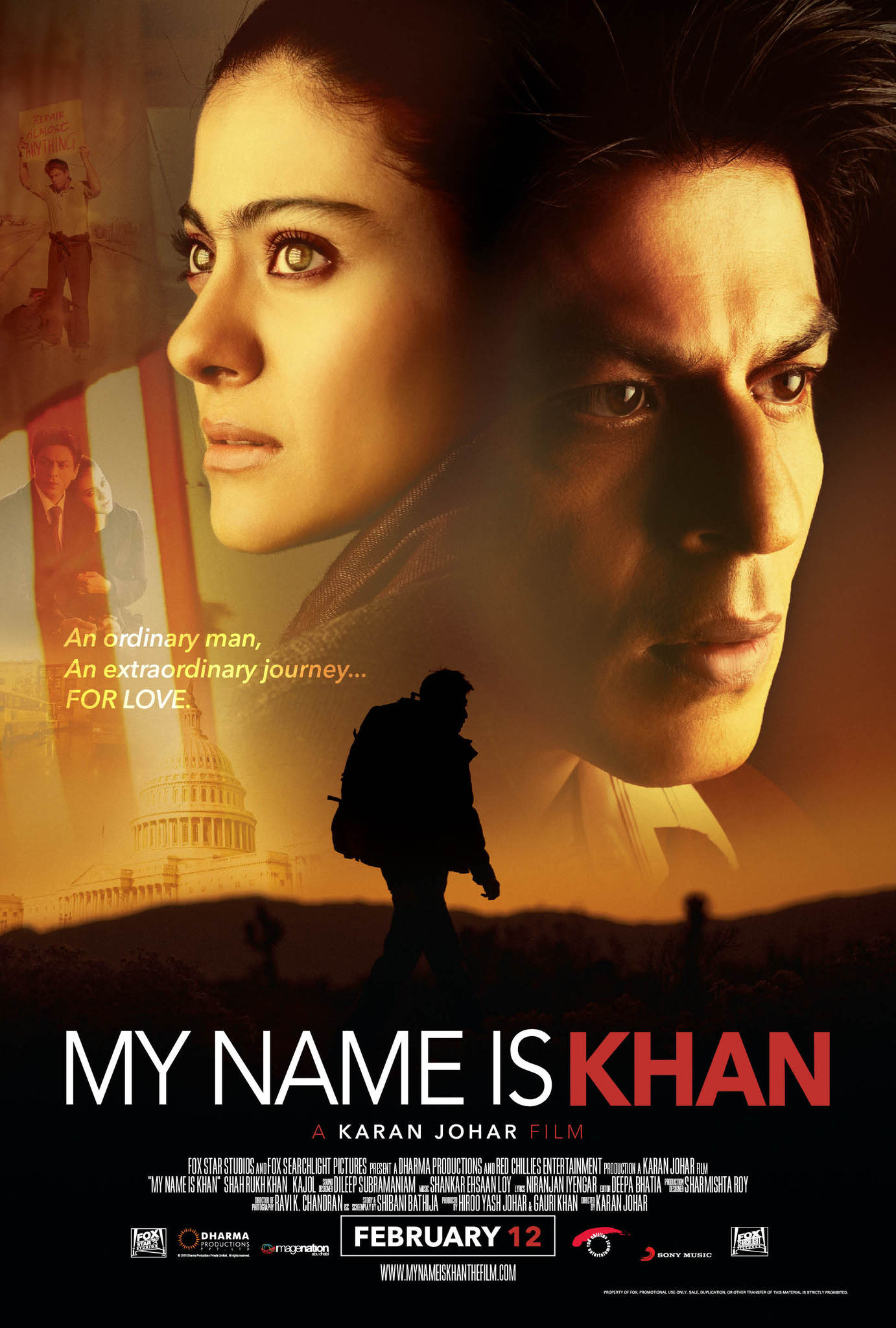
'My Name is Khan' is a 2010 movie directed by Karan Johar and starring Kajol and Shahrukh Khan. The film is about Rizwan Khan, a Muslim man with Autism Disorder. He travels across the United States to meet the President because his Hindu wife, Mandira Rathod, faced discrimination due to Islamophobia after the September 11 attacks. 

'New York' is a 2009 movie directed by Kabir Khan and starring Katrina Kaif, Irrfan Khan, Neil Nitin Mukesh, John Abraham and Nawazuddin Siddiqui. The story unfolds against the backdrop of post-9/11 paranoia and the impact it has on the lives of these characters. The narrative delves into issues of suspicion, patriotism, and the emotional struggles of individuals caught in the aftermath of the tragic events. 

MARKET FUNDAMENTALISM 
As this plays an important role in Postcolonialism P. Sainath observed that 'Market fundamentalism, believing that the market solves all human issues, transcends national, cultural, and religious boundaries. It exists globally and swiftly transitioned some societies from apartheid to neo-liberalism, contributing to various religious fundamentalisms. It's akin to a kind of religious fundamentalism itself, causing distress and anger, recruiting followers across different societies.' Further, Globalization, often claimed as integration and development, has instead led to imposition, disintegration, underdevelopment, and appropriation. It involves exploiting third world countries by demanding debt payments, decreasing raw material prices, removing protective measures, allowing foreign corporations to dominate economies, enabling speculative capital movement, reducing state spending on development and welfare, privatizing services and resources, increasing the cost of essential goods, worsening women's consumption, diminishing job security, reducing wages, and harming domestic industries, agriculture, and food security. 
Further, this article also throws light on The New York Times report on massive protests in La Paz on Friday, October 17, 2003. The demonstrations challenged military blockades and aimed to oppose a proposal to export natural gas to the United States, which says, 
'Globalization is just another name for submission and domination', Nicanor Apaza, 46, an unemployed miner, said at a demonstration this week in which Indian women ... carried banners denouncing the International Monetary Fund and demanding the president's resignation. 'We've had to live with that here for 500 years, and now we want to be our own masters.'
Further it talks about the project of Bolivia of $5 Billion ges pipeline for economic experiment. Nobel laureate Joseph E. Stiglitz criticizes globalization by employing the term "Market Fundamentalism," highlighting its imposition on the world through institutions like the World Bank and the IMF. The point of view of Globalization theories and Contemporary Advocates seems to be different and advocates do not face difficulties in considering the USA as a beneficiary of this new world order. Since 9/11, some UK and US thinkers propose a new US-led imperialism to fill post-decolonization power gaps. They look to past empires, like the Roman and British, for inspiration. Niall Ferguson supports a US empire to establish foundations for capitalism and democracy, even through military force. He urges a British Empire-style approach, encouraging a prolonged presence in places like Iraq and sending the best individuals, not immigrants or less privileged, as colonial forces. Supporters of the new American empire both embrace the legacy of past empires and assert a unique exceptionalism for the US empire. This is seen in Robert D. Kaplan's essay 'Supremacy by Stealth' in The Atlantic Monthly. He finds no conflict between global networks as noted by Hardt and Negri and the idea of an American hegemony.
The historian Erich S. Gruen has observed that Rome's expansion throughout the Mediterranean littoral may well have been motivated not by an appetite for conquest per se but because it was thought necessary for the security of the core homeland. The same is true for the United States worldwide, an age of collapsed distances. This American imperium is without colonies, designed for a jet-and-information age in which mass movements of people and capital dilute the traditional meaning of sovereignty.
Further in the article, Kaplan outlines ten rules for the US Empire, drawing from the British Empire and America's past. He suggests invoking male bonding for 'Manliness' (Rule No. 1) and rewriting history openly, like US policy in Latin America, to shape future actions (Rule No. 5). This rewriting, seen in various histories, tries to paint a favorable picture of imperialism, denying racism or justifying colonization. These actions not only distort anti-colonial and postcolonial studies but also directly challenge them. Dinesh D'Souza criticizes these academic fields, associating them with justifications for violence. During medieval times, the idea of translatio imperii was often used to justify European imperialism. 
The Bush administration's rhetoric during the Iraq War echoed Hardt and Negri's concept of Empire, suggesting that the US was acting on behalf of global rights. However, worldwide protests against the war showed that most people and many nations did not support US intervention. This suggests that national interests still play a significant role in shaping global conflicts, even in a world of increasing globalization.
While the power of nations has diminished in some ways, it is premature to dismiss nations and nationalist thinking as solely responsible for imperial activities and opposition. Instead, we should see nations and the new global order as forming alliances and conflicts. Some nations challenge the dominance of powerful countries like the US, while others collaborate with multinational corporations. In recent years, religious, linguistic, or ethnic nationalisms have grown, which can fuel movements against multinationals but can also support regressive anti-US movements. These movements can sometimes blur the lines between opposing forces, as seen in Iraq, where opposing forces with different political and religious views come together in anti-US protests. As Arundhati Roy writes, 
The thing to understand is that modern democracy is safely premised on an almost religious acceptance of the nation state. But corporate globalization is not. Liquid capital is not. So though even capital needs the coercive powers of the nation state to put down revolts in the servants' quarters, this setup ensures that no individual nation can oppose corporate globalization on its own. Radical change cannot and will not be negotiated by governments; it can only be enforced by people. By the public. A public who can link hands across the national borders.
Further this article goes on the topic of Narmada Bachao Andolan that The Narmada Bachao Andolan (NBA) in India protested the Narmada Valley Development project, aiming to construct many large dams across central India. These dams were unsustainable and would displace thousands of tribal people in the Narmada valley. The project received funding from multinational and local sources. After a prolonged struggle led by the NBA, the World Bank withdrew its support in 1993. However, the Indian Supreme Court ultimately decided that the dam construction would proceed.

Chittaroopa Palit, one of the leaders of the movement, says that,
The NBA learnt a lot about the structures and processes of globalization through these struggles-and about the need for global alliances from below, to confront it. But though international political factors, the character of the governments involved, the existence of able support groups in the North-play an important part, they cannot supplant the role of a mass movement struggling on the ground. Soon after the SPD government in Berlin refused a guarantee to Siemens [a German multinational] for Maheshwar, it agreed to underwrite the company's involvement in the Tehri dam in the Himalayas and the catastrophic Three Gorges Dam in China-both just as destructive as the Narmada project; but in neither instance were there strong mass struggles on the ground.
The Narmada Bachao Andolan (NBA) in India resisted a large dam project using local knowledge and techniques inspired by Gandhi's anti-colonial methods. The movement gained support from women's groups, trade unions, and left-wing parties in India and also received international backing. Even though the NBA couldn't halt the dam construction, it mobilized and raised awareness among millions of people. This highlighted the link between local and global economic and political power.
Postcolonial scholars, aware of historical imperial connections, are well-suited to analyze modern global inequalities in today's complex economic, political, and cultural landscapes. However, the study of pre-colonial history is vital for a deeper understanding of the present. Engaging with these longer histories can enhance postcolonial studies' approach to contemporary issues.

EDUCATIONAL INSTITUTIONS/INSTITUTES
After all this discussion and debat the focus of this throws light on Educational Institutions. Further, in the article it is noted that New imperialism involves educational institutions, with Niall Ferguson suggesting that the US should send its top students on imperial missions. However, the American Council of Trustees and Alumni (ACTA) claims that universities are failing in this regard because many academics and students criticize US policies. On campuses, there's a common view that Western civilization, despite its contributions to democracy and human rights, is the root of global issues. After 9/11, the ACTA criticized universities for adding courses on Islamic and Asian cultures instead of emphasizing the unique contributions of America and Western civilization. In the context of criticism against Western history and literature education, postcolonial studies are increasingly targeted. Stanley Kurtz from Stanford University's Hoover Institution has advocated linking federal funding to "area studies" centers with training students for national security, defense, intelligence agencies, and the Foreign Service. Kurtz alleges that these centers, influenced by postcolonial scholarship, have become "anti-American," echoing Edward Said's views in Orientalism. Said highlighted the connection between scholarship and state power in the colonial period, emphasizing its continuation in a post-colonial global context with the US as a focal point. To maintain universities as spaces of dissent and free intellectual inquiry, critiques of past and ongoing empires are more crucial than ever.
  • Here are the questions - In what ways has 9/11 changed the delivery of higher education in the U.S.?, What was the effect of 9/11 on academic freedom?, In what ways has 9/11 affected international education?, etc. - discussed to understand the impact of 9/11 in higher education in University at Albany a State University of New York. (Click here to read more)
  • If we talk about the impact of Globalization on Education, this website is worth referring to, which is titled 'The Impact of Globalization on Education in India 2023' written by Professor Arun C Mehta, Ex. HoD of EMIS Department, NIEPA. (Click here to read more)
  • Here is a video available on YouTube on The Myths of Globalizations by Peter Alfandary.


WORKS CITED:-

Words:- 3374

Note:- I took help from the Chat GPT for certain points and mostly to make my blog Grammar error free and If you have any questions or doubts comment it down or contact me on my Social Media.


Wednesday, November 8, 2023

Cultural Studies in Practice

TOPIC OF THE BLOG:- 

This blog is a part of a thinking activity given by Dilip Barad Sir from The English Department, MKBU, Bhavnagar. Check out Dilip Barad sir's Blog Site (Click Here) for more information and knowledge about  works and writers. In this blog I am going to discuss which approach of CS is applied in the reading of the play 'Hamlet', poem 'Coy Mistress' and novel 'Frankenstein' according to my understanding of this. This whole blog is like a reflection of the book named 'A Handbook of Critical Approaches to Literature' by Wilfred Guerin. 

WHAT IS CULTURAL STUDIES?:-
Cultural Studies is an interdisciplinary field of academic study that explores and analyzes various aspects of culture, including popular culture, media, art, literature, language, and everyday life. It emerged in the mid-20th century and has since developed into a diverse and dynamic area of scholarship. Some key aspects of Cultural Studies include:
1. Interdisciplinarity: Cultural Studies draws on multiple academic disciplines, including sociology, anthropology, literature, history, media studies, and more, to examine how culture shapes and is shaped by society.
2. Focus on Power and Identity: Cultural Studies often scrutinizes issues of power, identity, and representation. It examines how cultural practices, texts, and artifacts can reinforce or challenge existing power structures and social norms.
3. Popular Culture: It pays particular attention to popular culture, such as music, television, film, fashion, and digital media, as these elements play a significant role in shaping contemporary societies and influencing individual and collective identities.
4. Critical Analysis: Cultural Studies scholars employ critical and theoretical approaches to dissect cultural phenomena, seeking to uncover underlying meanings and ideologies. This critical perspective can reveal hidden biases and assumptions within cultural artifacts.
5. Cultural Production and Consumption: It looks at both the production and consumption of culture, examining the creative processes involved in cultural production and how audiences interact with and interpret cultural products.
6. Global and Local Perspectives: Cultural Studies can adopt both global and local lenses to analyze how culture operates at various scales, from the global flow of information and media to the intricacies of local communities and subcultures.
7. Social Change: Cultural Studies often seeks to understand how culture influences and is influenced by social and political change, including issues related to social justice, gender, race, class, and more.
Overall, Cultural Studies provides a framework for understanding how culture is central to our lives and how it impacts our worldviews, behaviors, and interactions with others. It is a dynamic and evolving field, adapting to the changing cultural landscape and technological advancements of the modern era. (Chat GPT)
Here is a video available on YouTube by Kalyani Vallath Ma'am to understand Cultural Studies more deeply:-

Cultural Studies: 'HAMLET':- 
"Hamlet," written around 1600 by William Shakespeare, is a renowned tragedy featuring Prince Hamlet of Denmark. The play delves into themes of revenge, madness, political intrigue, and human nature. Hamlet grapples with avenging his father's murder by his uncle, King Claudius. This timeless work is celebrated for its poetic language and iconic soliloquies, particularly the "To be or not to be" speech. Hamlet's struggle and  wish to kill her father's killer somewhere are the reasons which make this work more interesting to read.
Little different from the original plot and idea executed here in Cultural Studies in 'Hamlet'. In this part there are two Characters are discussed named Rosencrantz and Guildenstern with the view to seeing power in its cultural context. And as a Marginalized Characters. 

In the next Paragraph there is a description that These two Characters play which role in Hamlet. Here is one scene in which Claudius is talking with Rosencrantz and Guildenstern - these both are Hamlet's Friends and fellow students from Wittenberg. 

Here this speech by Rosencrantz 'response to Claudius's plan to send Hamlet to England is considered as a good speech and with an excellent set of metaphors. 

The singular and peculiar life is bound
With all the strength and armor of the mind
To keep itselfrom noyance, but much more
That spirit upon whose weal depends and rests
The lives of many. The cease of majesty
Dies not alone, but like a gulf doth draw
What's near it with it. lt is a massy wheel
Fixed on the summit of the highest mount,
To whose huge spokes ten thousand lesser things
Are mortised and adjoined; which, when it falls,
Each small annexment, petty consequence,
Attends the boisterous ruin. Never alone
Did the King sigh but with a general troun........ (Guerin)

In this speech we may find something like this that  the concept of the singular and peculiar life of a ruler or king and the significant responsibility they bear for the well-being of many people

Further here is an argument to readers about how many readers consider this passage among the best - known lines of the play. Why is this passage not well known? It is said that Rosencrantz and Guildenstern are among the jellyfish of Shakespeare's Characters. Means easy to forget.

Murray J. Levith wrote that Rosencrantz and Guildenstern are from the Dutch - German: literally, 'Garland of Rose's and Golden Star. Their names together sound like a song and have jingling in it. 

Then here is a mention of the characters Solanio and Salarino from William Shakespeare's play "The Merchant of Venice." Granville-Barker mentions that actors often find these two roles to be particularly uninteresting or dull. In his view, they are considered by actors as "the two worst bores in the whole Shakespearean canon," he even compares them to another pair of characters, Rosencrantz and Guildenstern, from Shakespeare's play "Hamlet," whom he also considers unremarkable or lacking in depth. 

The next Paragraph is highlighting that the names Rosencrantz and Guildenstern in "Hamlet" may not accurately represent the social status or historical significance to individuals with the same names in real life, but Shakespeare likely used them for their grand and Danish-sounding qualities and because they sound grand and are associated with Denmark. 

Next paragraph explores what these two Characters do and what is done to them. Their primary mission is to gather information from Hamlet. But Hamlet foils them means he sees through their motives and realizes that they are being used as pawns by Claudius to spy on him. Later in the play, Claudius sends Rosencrantz and Guildenstern on an embassy to England, carrying a letter that orders Hamlet's execution. Although they may not have been aware of the letter's contents, Hamlet suspects them of being involved in this plot against him.

They must sweep my way,
And marshal me to knavery. Let it work,
For 'tis the sport to have the engineer
Hoist with his own petard. And 't shall go hard
But I will delve one yard below their mines
And blow them to the moon: Oh, 'tis most sweet
When in one line two crafts directly meet. (Guerin)

In the passage there is one line - Hoist with own petard - says about Rosencrantz, Guildenstern and Claudius caught in one's own trap. 

Further, Hamlet explains to Horatio that he is not guilty for what he did to Rosencrantz and Guildenstern, because it is the result of their own actions. 

With the next Paragraph one can say that Hamlet may well see himself as righting the moral order, not as a murderer. He says that too that, once Claudius uses someone he discards them and these two are just pawns to him and Hamlet calls Rosencrantz a sponge. 

Hamlet: . . . Besides, to be demanded of a sponge! What replication should be made by the son of a king? Rosencrantz: Take you me for a sponge, my lord? Hamlet: Aye, sir, that soaks up the King's countenance, his rewards, his authorities. But such officers do the King best service in the end. He keeps them, like an ape, in the corner of his jaw, first mouthed, to be last swallowed. When he needs what you have gleaned, it is but squeezing you and, sponge, you shall be dry again. (Guerin)

Further, it is said that they are considered as pawn sponges even as monkey food. They both school fellows may have some good intentions toward Hamlet but the main or more important motive is to please the king.

These above paragraphs discussed power and how it works in the life of a king and some pawn. In the next Paragraph there are some examples to describe the Power served Policy.

Further he talked about contemporary time's the Rosencrantz and Guildenstern are dead by Tom Stoppard. In that work these two are like ineffectual pawns, seeking constantly to know who they are, why they are here, where they are going. Rosencrantz and Guildenstern are Archetypal human beings caught up on a ship and are like a person who is already dead. 

If Shakespeare marginalized the powerless, Stoppard has marginalized us all in his version of Rosencrantz and Guildenstern. Whether in Shakespeare's version or Stoppard's Rosencrantz and Guildenstern are no more than what Rosencrantz called a Small annexment a petty consequence mere nothings for the massy wheel of kings.


Cultural Studies: 'TO HIS COY MISTRESS':-

  • In "To His Coy Mistress," the speaker reveals a lot about himself through the poem. Traditional analyses suggest he's familiar with various literary traditions like Greek and Roman classics, medieval courtly love, Biblical references, and even concepts from philosophers like Aquinas. He seems aware of different literary conventions, like the Provencal love tradition and neo-Petrarchan styles. The first stanza is said to emphasize its exaggerated literary style. 
  • The second stanza contains references to Horace's "carpe diem" theme and echoes from Ovid, the Book of Common Prayer, Greek Anthology, and Renaissance poets. It's suggested that the speaker imagines an implied audience that would recognize and understand the various kinds of love poems he echoes. The speaker is knowledgeable enough to playfully imitate or mock these traditions, not expecting the lady to take his exaggerated comments seriously. He's aware that she, being part of the same cultural background, would understand his playful references and not take his proposal literally.
  • The speaker, much like Marvell himself, appears to be highly educated and well-versed. He effortlessly uses various references and ideas that show what kind of person he is. He hopes that the person he's talking to or the one reading his poem will get these ideas and respond in a similar way, creating a connection. His mind is filled with thoughts of valuable things, faraway lands, and a life full of fun.
  • Other than what we directly learn from what he says, it's reasonable to think that the shy lady he's addressing is educated too and understands the jokes and literary tools he's using. He believes she gets the playful side of his words because by involving her in the jokes, he's trying to catch her interest and distract from his physical desires. If they share the same understanding and humor, they might end up getting closer in a more personal way. This gives us a peek into the time and culture of the speaker, the lady he's talking to, and the presumed reader of the poem.
  • The speaker in the poem doesn't talk about some important things in life. He doesn't mention how tough life was for many people, dealing with being poor or having illnesses, like the common sexually transmitted disease of his time, syphilis. Even though he talks a bit about death in the future, his main focus is on enjoying wealth, free time, and having fun in the present. He completely ignores the serious problems of diseases, poverty, and the big, history-changing events like the devastating Black Death that affected Europe.
  • If we look at what was really happening in history, the poem doesn't talk about the diseases that were widespread during that time. For instance, it doesn't mention the Great Plague that hit London in the 1660s, even though it was a major and scary event that caused many deaths. Although diseases were a big deal in the 17th century, the poem doesn't pay any attention to these harsh realities. The speaker and the lady might have known about these problems. It's possible that they deliberately avoided talking about these hard things and instead focused on more pleasant parts of life.
  • To see any poem or work through the lens of Cultural Studies, it mostly sees the parts which are suppressed by the readers and Cultural Studies unlocks that door. 
Cultural Studies: 'FRANKENSTEIN':- 

'Frankenstein' by Mary Shelley, through the lens of Cultural Studies can be seen in so many parts:-
1) Revolutionary Births:-
Frankenstein, made during a time of many changes, questioned the ideas of its time. Maybe the way it keeps changing shows it's still a rebellious story at its core. Today, Frankenstein is a strong symbol, especially in a world all about buying things and trying to be real while feeling worried about it. You can see Frankenstein's influence everywhere, like calling Saddam Hussein an "American-made Frankenstein" or cautioning about genetically changed foods, test-tube babies, and cloning. This story talks about big political and scientific topics and has gone into popular culture through books, plays, movies, and TV shows. It's not common for one story to deal with current scientific and political matters while also entertaining many generations of people.
  • The Creature as Proletarian:- Mary Shelley lived in a time of big changes in Britain, and her family knew radical thinkers like Thomas Paine and William Blake. Her husband, Percy Shelley, also wanted big changes and was watched by the government. In "Frankenstein," the author's worries about revolution and feelings for the poor reflect her own struggles. The Creature in the story is a mix of good and bad, much like Mary Shelley. Monsters like the Creature are complex. They challenge the way things are, often created by that same order. When they survive, even if they look strange, it's like winning against the odds. But society feels safer when these monsters are caught. That's why there were many Frankenstein-like movies during the Cold War. The Creature's rebellious nature is deep-rooted. It reads books that inspire change, yet even with good ideas, it can't fit in or be accepted by society. Its education from these books doesn't help it belong in a society that doesn't want it, even if it knows a lot about freedom.
  • 'A Race of Devils':- In "Frankenstein," the Creature's yellow skin represents the fear of outsiders or those seen as different, reflecting prejudices against various groups, including Africans, prevalent in Mary Shelley's time. The depiction of Africans was influenced by the anti-slavery movement, showing them as pitiable and childlike. Interestingly, there was a reference to Frankenstein in Parliament, comparing setting a slave free to the novel's creature. The story also reflects ideas from German race theorists about different racial origins. Gayatri Chakravorty Spivak views "Frankenstein" as criticizing empire and racism. It highlights that social decisions shouldn’t rely only on theories or science. The novel's racism connects with concerns about male dominance and a retreat from sexual reproduction. It's considered a story told from an underprivileged perspective.
  • From Natural Philosophy to Cyborg:- Today, in a time focused on genetic engineering and cloning, "Frankenstein" stays important. During the Romantic era, science shifted from natural philosophy to biology, which is a key part of the book. Mary Shelley saw demonstrations showing electricity's effect on bodies, inspiring her story. Luigi Galvani's experiments moving muscles with electricity influenced talks among Percy Shelley, Byron, and Polidori in Geneva, discussing contrasting views on life. Now, with fertility science advances like genetic engineering and in vitro fertilization, tough decisions arise for couples about handling multiple births and premature babies. There's a debate if science is going too far. "Frankenstein" links with present ideas such as sperm banks and artificial wombs, reflecting a desire to control reproduction. The book's warning about ambitious science remains relevant as it explores the limits between life and death, selective reduction, and life support.
2) The Frankenpheme in Popular Culture: Fiction, Drama, Film, Television:-
In the Routledge Literary Sourcebook on Frankenstein, Timothy Morton talks about "Frankenphemes," elements from language sounds and visuals, drawn from Mary Shelley's novel. These elements appear in different cultural works inspired by "Frankenstein," seen in discussions about race, class, debates on genetically engineered foods, and in various forms of fiction, drama, film, and TV.
  • "The Greatest Horror Story Novel Ever Written":- "Frankenstein's Fictions" talks about how many authors used Mary Shelley's story as inspiration for new tales. Peter Haining, from the "Frankenstein Omnibus," thinks it's the greatest horror novel ever. Herman Melville's "The Bell-Tower" was the first short story inspired by "Frankenstein," showing a scientist creating a mechanical man that turns against him in Italy. Villiers de L'Isle Adam's "The Future Eve" was the first story about a female monster, and other writers, like W.C. Morrow and Jack London, also wrote stories about bringing the dead back to life. H.P. Lovecraft wrote "The Reanimator," later made into a movie, where experiments are done on dead bodies. There are also versions for children and other diverse interpretations.
  • Frankenstein on the Stage:- Stage and screen adaptations often make the Creature scarier and blame Victor less, focusing on dramatic scenes and leaving out the novel's complexities. They usually highlight specific moments like the Creature's creation and destruction, skipping smaller characters and the novel's structure. The first play, "Presumption, or, The Fate of Frankenstein," in 1823 was okayed by Mary Shelley, but it led to parodies. Later, "The Rocky Horror Show" and "The Rocky Horror Picture Show" took a more modern, sometimes funny approach, altering the story with new characters. These adaptations are quite different from the original.
  • Film Adaptations:- In the Frankenstein Omnibus, there's the screenplay for the famous 1931 film, where James Whale added new elements, like using a criminal brain for the monster. Thomas Edison's 1910 film was the first, breaking from the melodrama of stage shows to focus on more dreamlike episodes. Whale's film and Boris Karloff's role had a big influence on later portrayals. The changes made by Whale stuck, like the grunting Creature, Victor called "Henry," an assistant named Fritz, and a happy ending. Whale's movie reflected an American idea about biology determining behavior and crime. In "Bride of Frankenstein," there's a mix of comedy and horror. It focuses on new characters, Dr. Pretorius and a female Creature, showing the Creature as more innocent and society as the real danger. The 1994 film by Kenneth Branagh tries to stick to the novel but changes the story towards a love plot between Victor and Elizabeth.
  • Television Adaptations:- Frankenstein has appeared in many TV shows, like The Addams Family, The Munsters, and The Simpsons. There have been various actors portraying the Creature, such as Bo Svenson, Randy Quaid, and David Warner. A notable TV adaptation was "Frankenstein: The True Story" from 1972, featuring a great cast and a script by Christopher Isherwood. The show had actors like James Mason, Jane Seymour, Michael Sarrazin, and even Tom Baker from Doctor Who - as described in the book named 'A Handbook of Critical Approaches to Literature'.
Here is video available on YouTube which described how the monster Frankenstein is made for the good impact in movie:-

WORKS CITED:-

Words:- 3276

Note:- I took help from the Chat GPT for certain points and mostly to make my blog Grammar error free and If you have any questions or doubts comment it down or contact me on my Social Media.

J. M. Coetzee’s ‘Foe’ & Daniel Defoe’s ‘Robinson Crusoe’: A Comparative Analysis

TOPIC OF THE BLOG:- 

This blog is a part of a thinking activity given by Megha Trivedi Ma'am from The English Department, MKBU, Bhavnagar. Check out Megha Trivedi Ma'am's Blog Site (Click Here) for more information and knowledge about works and writers. In this blog I am going to discuss the comparison between 'Foe' by J. M. Coetzee and 'Robinson Crusoe' by Daniel Defoe.


J. M. COETZEE:- 

J.M. Coetzee, born on February 9, 1940, in Cape Town, South Africa, is a distinguished South African novelist, critic, and translator renowned for his literary works exploring the impacts of colonization. He was awarded the Nobel Prize for Literature in 2003 for his notable contributions to the field. (Britannica)

J.M. Coetzee's writing career began in 1969 with his first book, "Dusklands," published in 1974. His novel "In the Heart of the Country" won South Africa's CNA Prize in 1977 and gained attention globally with "Waiting for the Barbarians" (1980). Achieving acclaim, he won the Booker Prize with "Life & Times of Michael K" (1983) and "Disgrace" (1999). Beyond fiction, he penned fictionalized memoirs like "Boyhood" (1997) and "Youth" (2002), and explored topics of literary censorship and South African culture in essay collections like "White Writing" (1988), "Doubling the Point" (1992), and "Stranger Shores" (2001). He also delved into fictionalized lectures with "The Lives of Animals" (1999), later included in "Elizabeth Costello" (2003). (J. M. Coetzee)

'FOE':- 

  • Writer: J. M. Coetzee 
  • Published: 1986 
  • Main Characters: Susan Barton, Friday, Cruso & Foe 
  • Post-Colonial Novel 
  • Follows the story of female character Susan Barton and experience of her adventure (Coetzee)
"Foe" by J.M. Coetzee is a different version of the famous story "Robinson Crusoe." It's about a woman named Susan Barton who gets stuck on an island. There, she meets Robinson Crusoe and his friend Friday. But this book is not just an adventure story. It's more about who has power, how we tell stories, and how we use language. Susan struggles to tell her story, so she asks a writer named Foe for help. He tries to make her experiences into a story. This book makes us think about who gets to tell stories and why it's hard to show things accurately. It talks about problems like colonialism and differences between men and women. It also talks about how we tell stories and why it's not easy because of language.

DANIEL DEFOE:-

No man has tasted differing fortunes more, 

And thirteen times I have been rich and poor. (Mutter)

Daniel Defoe was born in London, England, in 1660 and passed away on April 24, 1731, also in London. Daniel Defoe was an English writer who wrote famous books like "Robinson Crusoe" and "Moll Flanders." He was also a journalist and wrote for the government. "Robinson Crusoe," published in 1719, became really popular and was translated into many languages. In his stories, Defoe showed a deep understanding of people and their struggles, even though his characters often found themselves in unusual situations. His writing style was simple and detailed, making the stories seem very real. His books sometimes had some problems like being too preachy and lacking a clear shape. But still, he was a powerful writer who knew how to keep readers interested. His last major book was "Roxana," and even as his health declined, he continued to write until the end of his life. (Mutter)

'ROBINSON CRUSOE':-

  • Writer: Daniel Defoe Published : 25 April, 1719 
  • Main Characters: Robinson Crusoe, Friday & Xury 
  • Colonial Novel 
  • Follows the story and adventure of male character Robinson Crusoe (Defoe)
"Robinson Crusoe" is a famous book by Daniel Defoe. It's about a man named Robinson Crusoe who gets stuck on a faraway island for 28 years because his ship crashes. He figures out how to live there by making a home, finding food, and taking care of the land. The story tells about how he survives, meets some people who want to eat him, and later becomes friends with a guy named Friday, whom he saves. It shows how he never gives up and learns to live all by himself on the island. 
Here is an animated video to understand this story available on YouTube:-

COMPARISON OF THE CHARACTERS:-
Protagonist:- 
In "Robinson Crusoe" by Daniel Defoe, the protagonist is Robinson Crusoe himself, a resourceful and determined man who becomes stranded on a deserted island and learns to survive against the odds.
In J.M. Coetzee's "Foe," the primary protagonist is Susan Barton, a castaway who meets Robinson Crusoe on an island. Susan seeks help from a writer named Foe to tell her story, as she struggles to communicate effectively. While Susan Barton is the central character, Foe also plays a significant role in the novel as a writer attempting to reshape Susan's experiences into a story.
This also can be seen as Gender reflection by Coetzee by changing the Protagonist from male to female in 'Foe'. 

“Cruso” vs. “Crusoe”:-
Cruso in this novel is more like a minor character than Crusoe. Similar to Robinson Crusoe, Cruso is a survivor of a shipwreck. Unlike the detailed background provided for Robinson Crusoe in Defoe's work, Cruso's past is shrouded in mystery. The novel does not provide a clear account of his life before the shipwreck. In "Foe," Cruso's character is used to explore themes of colonization, power dynamics, and exploitation. He becomes a symbol of how colonialism and storytelling can distort and silence the experiences of those who are subjugated.
Crusoe is a Protagonist of the novel and his adventure is the main idea discussed in it. He is curious, resourceful, and determined, which are qualities that serve him well during his trials on the deserted island. The central event of the novel occurs when Crusoe is shipwrecked on a deserted island off the coast of South America. He is the sole survivor of the shipwreck and is left stranded on the island, where he spends some of the years of his life. Crusoe's time on the island forces him to become self-reliant and he learns to build shelter, make tools, hunt, and cultivate crops.
  • Coetzee changed the way people think about English ideas by rewriting Robinson Crusoe. In "Foe," Cruso was different from the original Robinson Crusoe. In "Foe," Cruso was shown as old, not strong, silly, superstitious, stubborn, unsure, and not taking action.
  • Here is my Presentation on this topic.

SIMILARITIES & DIFFERENCES:-
His character is mysterious and open to interpretation, and his fate is left unresolved in "Foe." "Foe" by Coetzee explores themes of narrative and power. Readers are left to consider the possible outcomes that, Is Cruso Dead or Alive? In this novel Coetzee concentrated more on the character of Susan and did not give the proper description of Cruso. Foe has the ideas of Postcoloniality, Subaltern thought and Deconstruction of Defoe’s Eurocentrism. (Han)
In the end of the Robinson Crusoe, he and Friday are Rescued and return to civilization. Defoe centers on survival and self-reliance. Readers are left to consider the possible outcomes of what happened after Crusoe went to civilization. In this novel Defoe wrote the character development of Crusoe. Robinson Crusoe can be read as Allegorical Autobiography. Defoe is believed to have drawn inspiration from the actual experiences of Alexander Selkirk, a Scottish privateer who lived on the island of Juan Fernández, situated in the Pacific off the coast of Chile, when creating the character Robinson Crusoe. In this novel Defoe wrote the character development of Crusoe. Robinson Crusoe can be read as Allegorical Autobiography. (Seidel)

'FOE' AS A POSTCOLONIAL AND 'ROBINSON CRUSOE' AS A COLONIAL NOVEL:-

In J.M. Coetzee's book "Foe," things are shown in a different light compared to the usual stories about taking over other lands. The book changes how people usually tell stories about colonization. It looks at who has power and who doesn’t in these kinds of situations. The story focuses on a woman named Susan Barton, who is stuck on an island. She becomes the main person telling the story, and she faces a lot of difficulties in making others understand her experiences. This shows how hard it is for people whose voices aren’t usually heard, especially during times when one group of people controls another. The book is all about questioning the ideas of the people who come from Europe and how they see the world. It gives importance to voices that are often ignored, like Susan Barton's, showing how tough it is for those who aren’t in power to share their stories and be heard.

In "Robinson Crusoe," the book by Daniel Defoe, it shows how people from one place went to other lands and took control, emphasizing the idea of being in charge over those places and the people there. The main character, Robinson Crusoe, treats Friday, a native person, as someone below him, which reflects the idea of one group dominating another, more like Eurocentric Perspective. The story is mainly about Robinson Crusoe's point of view, and this makes the book all about how he sees the world, showing the viewpoint of people from Europe as the most important. It focuses on a man exploring, taking charge, and being in control on an island that he thinks nobody else lives on. The book reinforces the idea that one person from Europe can take over and be the most important, which was a common belief during the time the book was written.

Construction and Deconstruction of Imagined Community—A Comparative Study of Daniel Defoe’s Robinson Crusoe and J. M. Coetzee’s Foe in Light of Nationalism by Wenju Han from School of English Studies, Shanghai International Studies University, Shanghai, China:-

What is an Imagined Community?

"Imagined Communities" is a concept introduced by political scientist Benedict Anderson in his book of the same name, published in 1983. This concept refers to the idea that modern nations or communities are not defined solely by physical interactions or personal relationships among their members. Instead, they are "imagined" by the people who belong to them, often with a shared sense of identity and belonging, even if most of the individuals within the community will never meet or interact with each other personally. They share a common sense of identity, culture, history, and belonging, which is often reinforced through shared symbols, language, traditions, and narratives. This concept is particularly relevant in the context of modern nation-states, where millions of people can identify as citizens of the same country despite not knowing each other individually. (Examples:- LGBTQ, Weeb, Army(BTS), Etc.)

  • This paper argues that Defoe’s Robinson Crusoe contributed to form the nation of England as an imagined community, shaped “Englishness” and Euro-centrism, but J. M. Coetzee’s Foe deconstructed “Englishness” and Euro-centrism, aroused the national imagination of the Africans by rewriting it, so as to expose the fact that Euro-centrism was constructed by language, indict the Dutch and English colonial administration in South Africa and its profound and lasting hurt: the deprivation of the rights of speech, the destruction of their culture, and encourage the Africans to eliminate cultural inferiority and discrimination by creating new voice. (Han)
What is Euro - Centricism?

Nationalism:-

  • Some historians argue that colonialism was an outgrowth of nationalism. Once the people in the leading industrial powers started to strongly identify as British, French, German, American, or Japanese, they fell in love with the idea of planting their national flags all over the map. Hence, “empire.” 
  • They shared a common interest in extricating the nation from colonial rule and in establishing an independent nation-state with a distinct, unified national identity.
Further, If we see through the lens of Benedict Anderson's concept of imagined communities, "Robinson Crusoe" and "Foe" relate to each other in terms of deconstructing and reimagining characters and ideologies, and how they contribute to the national imagination of their respective countries. Also, It highlights how "Foe" is a postmodern and postcolonial reinterpretation of "Robinson Crusoe". Defoe contributed shaping to Eurocentrism by creating an enterprising English colonizer Robinson, who is the representative of the English bourgeoisie of the eighteenth century. J. M. Coetzee’s Foe can be seen as a postmodernist and postcolonial rewriting of Daniel Defoe’s Robinson Crusoe, as a parody.

Foe is the original name of Daniel Defoe. “Defoe later added the aristocratic-sounding “De'' to his name, and on occasion claimed descent from the family of De Beau Faux”. By changing Defoe to Foe, Coetzee sent Defoe back to his original name, and thus deconstructed Defoe’s construction of his name, disclosing the truth that everything can be constructed by words to serve one’s respective purpose. The purpose of J. M. Coetzee’s keeping the names of these characters is to deconstruct them. By subverting the hero Crusoe created by Defoe, J. M. Coetzee deconstructed Euro-centrism. He deconstructed the imagination of the English people of their national spirit of being superior colonizers, and constructed the national imagination of Africa.

  • Benedict Anderson (1991) defined nation as: It is an imagined political community—and imagined as both inherently limited and sovereign. 
  • Inherently Limited: Anderson emphasizes that nations have boundaries or limits. They are not boundless or infinite. Instead, they have specific geographical, cultural, or historical boundaries that define the extent of the community. These limits help distinguish one nation from another. 
  • Sovereign: Example - a king who can rule his people without any interference from other countries. By switching Friday from a Caribbean boy in Robinson Crusoe to a Negro in Foe, and depicting him as a black slave whose tongue has been cut by the slave-traders or his master Cruso, Coetzee reminded the Africans of their history of being enslaved, colonized and silenced, and thus aroused the national imagination of the Africans as a community. (Han)

Daniel Defoe's construction of the National imagination of England by Robinson Crusoe:-

Eighteenth century marked the dawn of the age of nationalism. The Role of Language in Constructing the Imagined Community of England (The character Robinson in Robinson Crusoe speaks English, the language spoken and read by the English people. Those who spoke the same language would often identify themselves as the same community, so when the English people read the novel written in their language, and found that the hero’s mother tongue was also English, they would identify themselves with Robinson.) The Role of Places in Constructing the Imagined Community of England (Description of particular place - the city of York).

The Portraying of Characters in Arousing the Imagination of National Characteristics (Englishness, he was depicted as a strong-willed, God-like colonizer, which encouraged the English people to be colonizers of nature and other nations, Robinson colonized the “barbarous” people represented by Friday. He tamed Friday with guns, English and bible, which are the ways to colonize other peoples. Robinson succeeded in his colonization of Friday in language, Language Colonization, Religious Colonization, Lifestyle Colonization. Even in appearance, Friday was Europeanized,  He was Caribbean. (Han)

Coetzee's construction of the  National Imagination of Africa by rewriting Friday:-

  • By switching Friday from a Caribbean boy in Robinson Crusoe to a Negro in Foe, and depicting him as a black slave whose tongue has been cut by the slave-traders or his master Cruso, Coetzee reminded the Africans of their history of being enslaved, colonized and silenced, and thus aroused the national imagination of the Africans as a community. 
  • Friday’s loss of tongue symbolized the deprivation of the rights of speech of the black. Friday’s tongue was cut, which even caused Susan’s unselfconscious and uncontrollable discrimination, “I caught myself flinching when he came near, or holding my breath so as not to have to smell him. Behind his back I wiped the utensils his hands had touched”. 
  • Susan, who was sympathetic to Friday out of the same position as the oppressed, who was excluded and oppressed as women, had the rights of speech in Foe, so she symbolized the white in South Africa after gaining independence from the British Commonwealth of Nations. 
  • Friday was castrated, which was a metaphor of the destruction of African culture. In Foe, Coetzee revealed that Africa was distorted and ambiguous. When Susan found an Indiaman to send Friday to Africa, the mate of the ship told her that “Africa is a great place, madam, greater than I can tell you” But the master of the Indiaman told her that “One half of Africa is desert and the rest a stinking fever-ridden forest”. As to what Africa is really like, even Susan had no idea. The telling of the story of Africa was left to Friday, but he lost the power of discourse. So the essence of African culture was castrated by the colonizers. (Han)

WORKS CITED:-


Words:- 2920

Note:- If you have any questions or doubts comment it down or contact me on my Social Media.