Monday, November 7, 2022

Assignment - 2 - Comparative Study of Neo-classical age and Romanticism

TOPIC OF THE BLOG:-
This blog is part of an assignment for the paper 102 - Literature of the Neo-classical Period, Sem - 1, 2022.

 COMPARATIVE STUDY OF

NEO-CLASSICAL ERA 

AND ROMANTICISM 

TABLE OF CONTENTS:-

  • Personal Information
  • Assignment Details
  • Abstract
  • Keywords
  • Introduction
  • Neo Classical age
  • Pioneer Writers and Poets of Neo-classical age
  • Condition of women during the neo classical age and contemporary time
  • Romanticism
  • Difference between Neoclassicism and Romanticism
  • Common Aspects of Neoclassical age and Romanticism
  • Works Cited

PERSONAL INFORMATION:-

Name:- Pooja Anilbhai Bhuva

Batch:- M.A. Sem 1 (2022-2024)

Enrollment Number:- 4069206420220005

E-mail Address:- poojabhuva2002@gmail.com

Roll Number:- 17

ASSIGNMENT DETAILS:-

Topic:- Comparative Study of Neo-classical Era and Romanticism 

Paper & subject code:- 102 - Literature of the Neo-classical Period & 22393

Submitted to:- Smt. Sujata Binoy Gardi, Department of English, MKBU, Bhavnagar 

Date of Submission:- 7th November, 2022

About Assignment:- In this assignment I try to Compare Neo-Classical Era and Romantic Era with their Features, Characteristics, Writes, etc. 

ABSTRACT:-

Neo Classical age was started just after the Classical age. In the Classical age all the Writers and Poets imitated ancient Greeks and Romans. And in the Neo Classical age people imitated Classical age ideas. But when Neo Classical age was on its peak of falling, the age of reasons became unreliable at some point, the imitation became more and more in most of the works and Neo Classical age started to end in meaning of trueness and originality. Next age as a Romantic age grows as a feeling full and emotional age. It has its originality, spirituality and mysteriousness. The Neo Classical age has so many names like The Age of Prose, The Age of Reason, The Age of Enlightenment, The Age of Agriculture Revolution, The age of reason, Transition period, The age of satire. Jane Austen, Jane Locke, Alexander Pope and many more Writers and Poets are famous in the Neo Classical age. There is an interesting aspect of Women's condition also. Romanticism is a remarkable age in English Literature. William Wordsworth, Samuel Tylor Coleridge, John Keats, Percy Bysshe Shelley, Goerge Gordon Byron, William Blake, Robert Southey, Sir Walter Scott, and others are the Important Writers and Poets of the Romantic age. There are some similarities and Differences between these two ages. But both the ages are commonly Important in English Literature. 

KEYWORDS:-

Comparison, Similarities, Differences, Mystery, Spirituality, Reasons, Imitation, Classics, Movement

INTRODUCTION:-

Known with so many names The Neo Classical age has some important implications, Writers and Poets who made the Neo Classical age important in English literature and in History. 

Romanticism is also known as the romantic movement and the romantic era. This Era was an artistic, literary, musical, and intellectual movement.

'Romanticism is a beauty without bouncing the beautiful infinite.'

- Jean Paul

'I find the Romantic period extraordinarily interesting. My landscapes have connections with Romanticism: at times I feel a real desire for, an attraction to, this period, and some of my pictures are a homage to Caspar David Friedrich.'

-Gerhard Richter 

With these two points, we can clearly see how romanticism affects us. 

NEO CLASSICAL AGE:-

Neo-classical age, behind this name there were so many other name of this age like, The Augustan Age, The 18th Century Literature, The Age of Prose, The Age of Reason, The Age of Enlightenment, The Age of Agriculture Revolution, The age of reason, Transition period, The age of satire. According to English literature, the neo classical age is divided into three periods:-

  1. The Restoration Age (1660-1700), 
  2. The Augustan Age (1700-1750), 
  3. The Age of Johnson (1750-1798)

This age is totally opposite of the Romantic age, in the classical age writers used to write their works into classics, they normally followed the rules of Ancient Greek writers which they gave for writing the great work. 

For the classical age, Winckelmann said that,

'The one way for us to become great, perhaps inimitable, is by imitating the ancients.'

The Neo classical age followed the theory of writing that included own thinking writing, without any rules which were given by typically ancient Greek philosophers and writers. That's why it is called the Neo classical age.

'The best-laid plans of mice and men often go away.' 

(From the poem 'To a mouse' by Robert Burns in 1785)

PIONEER WRITERS AND POETS OF NEO-CLASSICAL AGE:-

Jane Austen:- She was born on December 16, 1775 in Steventon, Hampshire, England and died on July 18, 1817 in Winchester, Hampshire. She was the one English writer who first gave the novel its distinctly modern character. Some of her notable works include 'Emma', 'Lady Susan', 'Mansfield Park', 'Northanger Abbey', 'Persuasion', 'Pride and Prejudice', 'Sense and Sensibility', etc. (Britannica)

John Locke:- He was born on August 29, 1632 in Wrington, Somerset, England and died on October 28, 1704 in High Laver, Essex. He was an English philosopher whose works lie at the foundation of modern philosophical empiricism and political liberalism. Here are some of his notable works include 'A Letter Concerning Toleration', 'An Essay Concerning Human Understanding', 'Essays on the Law of Nature', 'Some Thoughts Concerning Education', 'The Reasonableness of Christianity', 'Two Tracts on Government', 'Two Treatises of Government', etc. (Rogers)

Jonathan Swift:- His pseudonym is Isaac Bickerstaff. He was born on November 30, 1667 in Dublin, Ireland and died on October 19, 1745 in Dublin. He was an Anglo-Irish author, who was the foremost prose satirist in the English language. Here are some of his notable works include 'A Modest Proposal', 'A Tale of a Tub', 'Argument Against Abolishing Christianity', 'Drapier’s Letters', 'Gulliver’s Travels', 'Journal to Stella', 'The Conduct of the Allies', 'Verses on the Death of Dr. Swift', etc. (Britannica)

Alexander Pope:- He was born on May 21, 1688 in London, England and died on May 30, 1744 in Twickenham, near London. He was a poet and satirist of the English Augustan period. Here are some of his notable works include 'An Epistle to Dr. Arbuthnot', 'An Essay on Criticism', 'An Essay on Man', 'Eloisa to Abelard', 'Epistle to the Right Honourable Richard Earl of Burlington', 'Memoirs of Martinus Scriblerus', 'The Dunciad', 'The New Dunciad', 'The Rape of the Lock', 'Windsor-Forest', etc. (Britannica)

Robert Burns:- He was born on January 25, 1759 in Alloway, Ayrshire, Scotland and died on July 21, 1796 in Dumfries, Dumfriesshire. He was the national poet of Scotland, who wrote lyrics and songs in Scots and in English. Here are some of his notable works include 'A Select Collection of Original Scottish Airs for the Voice', 'Poems, Chiefly in the Scottish Dialect', 'Tam o’Shanter', 'The Death and Dying Words of Poor Mailie', 'The Scots Musical Museum', etc. (Britannica)

CONDITION OF WOMEN DURING THE NEO CLASSICAL AGE AND CONTEMPORARY TIME:- 

The word women has so many meanings from every person's point of view and from every different society, cultures, and literature. In ancient times women were not used to writing or they had no right to write anything or even think of something about themselves. They just given some rules and some typical stereotype thoughts that women should stay in home cook for everyone and take care of their child, they should live in condition what society gave them.Until the ‘Reformation’ women theoretically had the option of continuing to live in a virginal state by entering the monastic life.

In the 17th century the professions like teacher, lawyer, doctor were closed to women. However some women had jobs. Some of them worked spinning cloth. Women were also tailors, milliners, dyers, shoemakers and embroiderers. There were also washerwomen. Some women worked in food preparation such as brewers, bakers or confectioners. Women also sold foodstuffs in the streets. A very common job for women was domestic servant. Other women were midwives and apothecaries.However most women were housewives and they were kept very busy.

Women’s roles within the family and local community allowed them to influence the political system. 

The eighteenth century brought the beginning of the British cultural revolution.The economic changes brought by the new middle class provided women with the opportunity to be more directly involved in commerce.Lower-to middle-class women often assisted their husbands in work outside the home. In France, Olympe de Gouges demanded equal rights for women in the new French Republic, and was eventually executed by guillotine in 1793.

In Now times women get the position that man have. They have right to write novels, poems and other works too. They also run the house by themselves. Now time we can say women has so many opportunities compare to 18th Century. Yes, 18th century was time when women started this revolution and in this time this revolution get in fire and every women are equal to men. 

ROMANTICISM:-

'Look deep into nature, and then you will understand everything better. '

- Albert Einstein

As we normally know, the romantic era started with the publication of Lyrical Ballads by William Wordsworth and ST Coleridge. Now let's look at history.

Elizabethans belonged to romanticism as Shakespeare was the first who introduced the spirit of romanticism but he had no successors to carry on. Thereupon it came to the end of the 18th century. During the 18th century Thomson published 'The Seasons'. it implies return to nature, crying for the beautiful, love of men, God Sensuousness, lyricism etc. In short romanticism expresses a new delight in theme, feeling and expression. In this way the seed of romanticism was shown by Thomson and Grew, Cowper, Collins, Burns. They were considered the fore-runners of romantic poets. Letter on romanticism was revived fully with the publication of Lyrical Ballads in 1778 by William Wordsworth and ST Coleridge. The first generation of romantics was Coleridge and Wordsworth. Vote for the first time emphasized upon the aims and objects of the new poetry. They introduced a number of new meters and they rejected poetic diction of the 18th century. They favored simplicity of theme. 

The second generation of the romantics were Keats, Shelley and Byron. They could get fame after their death. Keats was considered as the worshiper of beauty. Shelly was an idealist and lyricist of the first order. Byron Was the most passionate poet. 

Here are some features of Romanticism:-

  • Break from the set rules
  • Interest in country life
  • Love of liberty and freedom
  • Interest in the middle age
  • Love for beauty
  • Predominance of imagination and emotion
  • Supernaturalism

These all features have their own identity. These features are the main reason romanticism is very well known, interesting and important in English Literature. Also the Writers and Poets of the Romantic Era made this movement more powerful.

Major Poets and Writers of Romantic Era or Romanticism are include William Wordsworth, Samuel Tylor Coleridge, John Keats, Percy Bysshe Shelley, Goerge Gordon Byron, William Blake, Robert Southey, Sir Walter Scott, William Hazlitt, Jane Austen, etc. 

DIFFERENCE BETWEEN NEOCLASSICISM AND ROMANTICISM:-

  • Neo Classical age existed from 1660 to 1798 and Romanticism or Romantic age existed from 1798 to around 1837. 
  • Neo Classical age is the age of Reason and Romantic age believes in following Heart and feelings. This is the major and main difference between this two age. It also called that age of prose while Romantic age is age of Poem and age of nature. 
  • The Neo Classical age was inspired by Greeks and Romans and the Romantic age was inspired by the medieval era.
  • Neo Classical age uses the style of calmness and rational thoughts while romantic age follows spontaneity. 
  • Neo Classical age focuses on political and unemotional aspects while Romantic age mysterious and natural aspects. 

COMMON ASPECTS OF NEOCLASSICAL AGE AND ROMANTICISM:- 

  • Even though these two ages or movements are totally opposite from each other, there were some similarities in it. 
  • First one is that some Writers and Poets existed in this era and wrote for both eras, and give justice to both ages. 
  • Jane Austen, Percy Bysshe Shelley, Goerge Gordon Byron, etc writers or Poets are topics of discussion were they more Neo Classical or belong to Romantic age. 
  • Second is even though these two ages are different from each other, they are antagonists of what art should be about. 
  • Most of the work of both ages is based on Renaissance ideas. 
  • As the Romantic age started just after the Neo Classical age, it's Normal to have some Neo Classical ideas and thoughts in it. 

WORKS CITED:-

(Words:- 2,140)

Sunday, November 6, 2022

Assignment - 5 - Renaissance or Elizabethan Era

TOPIC OF THE BLOG:-

This blog is part of an assignment for the paper 105A - History of English Literature – From 1350 to 1900, Sem - 1, 2022.


 RENAISSANCE OR 

ELIZABETHAN ERA 

TABLE OF CONTENTS:-

  • Personal Information
  • Assignment Details
  • Abstract
  • Keywords
  • Introduction
  • Renaissance
  • Elizabethan Era
  • Combination and Influence of Renaissance and/on Elizabethan Era
  • Religion in Elizabethan Era
  • High Culture and Popular Culture in Elizabethan Era
  • Sonnet in Elizabethan Era
  • Major Themes of Elizabethan Sonnet
  • Reasons which brought the Renaissance in England

  • Works Cited

PERSONAL INFORMATION:-

Name:- Pooja Anilbhai Bhuva

Batch:- M.A. Sem 1 (2022-2024)

Enrollment Number:- 4069206420220005

E-mail Address:- poojabhuva2002@gmail.com

Roll Number:- 17

ASSIGNMENT DETAILS:-

Topic:- Renaissance or Elizabethan Era 

Paper & subject code:- 105A - History of English Literature – From 1350 to 1900 & 22396

Submitted to:- Smt. Sujata Binoy Gardi, Department of English, MKBU, Bhavnagar 

Date of Submission:- 7th November, 2022

About Assignment:- In this assignment I try to describe that the Elizabethan Era was influenced by Renaissance and what type of changes come with Renaissance and other aspects of Elizabethan Era and Renaissance Period.

ABSTRACT:- 

The Rebirth or Revival can be a great thing and a big part of life and Literature too. How Renaissance and Elizabethan age connected with each other and how Queen Elizabeth made progress under watch of her. Petrarch was the biggest reason for the Renaissance and its progress. If the Elizabethan Era and Renaissance are attached with each other, at the same time they are different from each other and also have Influence on each other. Elizabethan Literature has so deeply stamped its authority on all future literate endeavors in developments, that we, almost half a millennium later, still study it and admire its exceptional beauty and greatness. 

KEYWORDS:-

Revival, Beauty, Voyage, Traveling, Sonnet, Printing, Nationalism, Religion, Rebirth. 

INTRODUCTION:-

The Elizabethan age is remembered as the time of a great wave of English nationalism. As well as the early modern period in which the arts flourished. The time of Shakespeare was also the time of Elizabeth first I, who is one of the more memorable monarchs. Several gists can be said to the whole European Renaissance together over the three centuries which spanned. The longest greatest innovation of the Renaissance era was the printing press, put into service around 1440 by Johannes Gutenberg. Rudimentary presses had lived for a long time, but Gutenberg's design maximized publishing effectiveness in a way that altered the world of creative pursuits, notes, and concepts forever. If one can look at the Renaissance period one can automatically have a glimpse of the Elizabethan Era along with it. 

RENAISSANCE:-

The word 'Renaissance' means 'Rebirth', 'Revival', or 'Reawakening'. It refers to a period in European civilization that was marked by a revival of Classical learning and wisdom. It is a period in European civilization immediately following the Middle Ages. The Renaissance saw many contributions to different fields, including new scientific laws, new forms of art and architecture, and new religious and political ideas. (Britannica)

The Renaissance was the revival of ancient classic mythology, literature and culture. It can also be considered the reawakening of the human mind after the long slumber of the dark middle ages. It was the age of wonder, the glory and the beauty of the human mind. It appeared as if mankind was awakened from the long sleep and looked at the glory of nature with astonishment. It was the revival of the cult of beauty - the beauty of women, nature, art and literature. 

The Renaissance period started in Italy in the 14th century with the works of Petrarch (in the side picture) and certain others. In 1453 it was simulated by the fall of Constantinople in the invention of the printing press in Germany. The great discoveries of scientists and navigators also boosted the arrival of the Renaissance.

Petrarch 

ELIZABETHAN ERA:-

The timeline of the Elizabethan Era is 1558 - 1603. And the Queen of this Era was Queen Elizabeth I. The Elizabethan age saw the flowering of poetry (the sonnet, the Spenserian stanza, dramatic blank verse), was a golden age of drama (especially for the plays of Shakespeare), and inspired a wide variety of splendid prose (from historical chronicles, versions of the Holy Scriptures, pamphlets, and literary criticism to the first English novels). (Britannica)

This era is considered to be the literary height of the English Renaissance. The period revolutionized many aspects of English life, most significantly literature. The age was very rich in Literature and art as it was the age of revival of classical learning. The period was also the period of peace and prosperity in England. The Victorian era and the early 20th century idealized the Elizabethan Era. The ages is most famous for theater, as William Shakespeare and many others composed plays that broke free of England's past style of theater. The Elizabethan age contrasts sharply with the previous and following reigns. 

Economically, the country began to benefit greatly from the new era of trans - Atlantic trade and persistent theft of Spanish treasure. Elizabethan England was not particularly successful in a military sense during the period, but it avoided major defeats and built up a powerful navy. The Elizabethan age was also an age of plots and conspiracies, frequently political in nature and often involving the highest levels of Elizabethan Society. 

COMBINATION AND INFLUENCE OF RENAISSANCE AND/ON ELIZABETHAN ERA:- 

The Elizabethan age is the epoch in the Tudor Period of the history of England during the reign of Queen Elizabeth I. Influence of Renaissance reached England during the last phase of the 15th century and the beginning of the 16th century. 

'While Italy was a fire with the new sunrise, it was still for England 

merely a streak of light upon The horizon.'

Comption Rickett

The beginning of Renaissance what's the fall of Constantinople, the capital of the Roman Empire. After the fall of the Roman Empire, the Greek scholars went away to Italy with the valuable manuscripts. Thus the revival of classical studies began in Italy. Latin writers who were almost forgotten were rediscovered. Historians often depict Elizabethan age as the Golden age in English history. The Golden age represented the apogee of the English Renaissance and saw the flowering of poetry, music and literature. 

RELIGION IN ELIZABETHAN ERA:- 

Elizabeth managed to moderate the intense religious passions of the time. This was in significant contrast to previous and succeeding eras of marked religious violence. Elizabeth desired to moderate the religious persecutions of previous Tudor reigns - the persecution of catholics under Edward VI and of protestants under Mary I. 

HIGH CULTURE AND POPULAR CULTURE IN ELIZABETHAN ERA:- 

The high culture of the Elizabethan Renaissance was best expressed in its theater. Historical topics were especially popular, not to mention the usual comedies and tragedies. Traveling musicians were in great demand at court, in churches, at country houses, and at local festivals. Important composers included William Byrd, John Dowland, Thomas Campion and Robert Johnson. It became the fashion in the late 19th century to collect and sing the old songs. 

The annual summer fair and other seasonal fairs such as May Day were often bawdy affairs. Watching plays became popular during the Tudor period (1485 - 1603). Miracle plays were local re - enactments of stories from the Bible. There were many different types of Elizabethan sports and entertainment. Animal sports included Bear and Bull baiting, dog fighting and cock fighting. The rich enjoyed Tennis, fencing and jousting. Hunting was strictly limited to the upper class. Dice was your popular activity in all social classes. Cards appeared in Spain and Italy about 1370, but they probably came from Egypt. By the time of Elizabethan reign, gambling was a common sport. Upper and lower both classes are played cards. Popular card games included Maw, Once and Thirty and Bone -ace. Every month had its own holiday. 

SONNET IN ELIZABETHAN ERA:-

Sonnet, the dominant form of poetry of the Elizabethan age. Brought to England in the early 16th century by Sir Thomas Wyatt and Henry Howard, Earl of Surrey; They adapted the form to the English language. Sonnet is a lyric in 14 lines of Iambic pentameter. The birthplace of the Sonnet has not been definitely determined. Most of the critics believe that Sicily and Provence must have been the two possible sources. The two most commonly occurring types of sonnets are as following:-

PETRARCHAN SONNET - divided into two stanzas, Eight Lines and Six Lines. Petrarchan Sonnet is characterized by the rhyme scheme ABBAABBA CDECDE.  

SHAKESPEAREAN SONNET - divided into three - four line Stanzas and follows the rhyme scheme ABAB CDCD EFEF GG. 

Other less frequently used forms of the Sonnet exist. At the time, the writing of poetry was a part of the education of a gentleman. Sonnets were very popular among the upper classes in the collection of sonnets and lyrics were often published. William Shakespeare was one of these Poets, since his collection of Sonnets. One of the best lyrical Poets of the Elizabethan age was Edmund Spenser. Other famous Poets of the age include Sir Philip Sidney, Sir Walter Raleigh and Christopher Marlowe. The main practitioners of the Elizabethan sonnet sequence were William Shakespeare, Edmund Spenser and Sir Philip Sidney. 

MAJOR THEMES OF ELIZABETHAN SONNET:- 

Some of the most significant themes in the Elizabethan Sonnet sequences include love, time, the value of writing, and the perpetuation of beauty. Surrey gave it a rhyming meter and structural division. Their works were first published in Richard Tottel's Songs and Sonnets in 1557. One of the first English Sonnet sequences came from George Gascoigne, Poet and dramatist. However, the Sonnet sequences started from 1591 with Philip Sidney who wrote Astrophel and Stella. It contains more than 100 Sonnets. Many Sonnets of the Elizabethan Era wrote about the frustration of unreciprocated love. Some however, like Spenser, celebrate the feeling of successful love. Another major theme of the Elizabethan Sonnet sequence is Time. Shakespeare, in particular, focused on how time could destroy nature and other beautiful things. William Shakespeare wrote 154 Sonnets which were published late in 1609. The Elizabethan Era ended in the year 1603. In the later 17th century, Sonnets were hardly written. However, William Wordsworth brought it back to Literature, writing himself hundreds of Sonnets. Keats also wrote many Sonnets using formal and rhetorical patterns. Shelley created a unique rhyme scheme. Sonnets were continued to be written in and after the 19th century, modified and alerted. 

REASONS WHICH BROUGHT THE RENAISSANCE IN ENGLAND:- 

PRINTING PRESS:- The most significant event which marks the dawn of the Renaissance in England is the invention of printing. It was first started in Germany and then Caxton established the printing press in England. The books were soon published and It helped the development of education and spread of knowledge. 

VOYAGES:- The English were the great explorers. They went to the west Indies and down the coast of South America and returned with their ships loaded with silver, gold, pearls, emeralds, silk and spices. The people listened to the traveller's tales with awe and astonishment. Their imagination became flamed and everywhere this was a strange breath of wonder. We find the expression of this wonder even in Shakespeare who said, "What a piece of work is man!" and "O' brave new world." 

NATIONALISM:- After the defeat of the Spanish Armada by the English, the national spirit in England rose to a great height. There was a great upsurge of patriotic feelings among the people of the time. We can feel the feeling in Chaucer and its blossoming in Elizabethan Literature. 

INDIVIDUALISM AND WORLDLINESS:- The Renaissance gave birth to individualism and worldliness. Greek Literature focuses more on the present world than the future World. Under the influence of Greek Literature, individualism and a sense of democracy developed. The writers began to voice their feelings and ideas freely. They criticized the government or the kings in their works. 

ASTRONOMICAL DISCOVERIES:- There were discoveries in the field of astronomy also. Copernicus also made discoveries in astronomy. The world was no longer a big place. New knowledge began to pour from all sides. All such discoveries made a great impact on the literature of the time. 

THE AGE OF SOCIAL CONTENTMENT:- During the age of Elizabeth, commerce made considerable progress. Thousands of people could get employment because of rapid increase in trade and commerce. Increasing trade brought enormous wealth to England. For the first time systematic care for the needy and the poor was attempted. There was improvement in the standard of life which brought about a new social content. 

ENTHUSIASM:- The Renaissance for the age of Elizabeth is an age of dreams, of adventure, of unbounded enthusiasm. The horizons were widened in all directions. Bacon said confidently, "I have taken all knowledge for my province." This enthusiasm is visible in Elizabeth and literature. 

With the combination of all these aspects one can clearly see that everything that happened means the Renaissance period came or age is revived all because every person of the age has liberty, freedom, chance, money and most important support of Kings and Queens. Elizabeth I too had some interest in Literature. He supports all the writers and poets. 

WORKS CITED:-

Saturday, November 5, 2022

Assignment - 4 - Obscureness in 'Jude The Obscure'

 TOPIC OF THE BLOG:-

This blog is part of an assignment for the paper 104 - Literature of Victorians, Sem - 1, 2022.


OBSCURENESS IN

'JUDE THE OBSCURE'

TABLE OF CONTENTS:-

  • Personal Information
  • Assignment Details
  • Abstract
  • Keywords
  • Introduction
  • Thomas Hardy
  • 'Jude The Obscure'
  • Characters
  • Main Characters
  • Minor Characters
  • What's 'Obscure' in the title?
  • Obscureness in Characters
  • Obscure Jude
  • Obscure Sue 'Susanna' Bridehead
  • Obscure Little Father Time
  • Obscure Arabella Donn
  • Richard Phillotson
  • Different Opinions on 'Jude The Obscure' 
  • Works Cited

PERSONAL INFORMATION:-

Name:- Pooja Anilbhai Bhuva

Batch:- M.A. Sem 1 (2022-2024)

Enrollment Number:- 4069206420220005

E-mail Address:- poojabhuva2002@gmail.com

Roll Number:- 17

ASSIGNMENT DETAILS:-

Topic:- Obscureness in 'Jude The Obscure'

Paper & subject code:- 104 - Literature of the Victorians & 22395 

Submitted to:- Smt. Sujata Binoy Gardi, Department of English, MKBU, Bhavnagar 

Date of Submission:- 7th November, 2022

About Assignment:- In this assignment I try to define and find What and Which Obscurity is in this Novel, how Hardy reflects in his novel and what others think about 'Jude The Obscure'. 

ABSTRACT:-

'Jude The Obscure' it's not only the greatest novel by Hardy but it's a true reflection of society, problems in marriage, the mindset of the people, freedom of each person, rights of everyone, gender description and so on. And also at the same time it's a satire on all of this. It was written in the Victorian era but one can consider it a modern novel. Thomas Hardy can imagine beyond his age, and beyond the other writers of the Victorian era. Of course it's a fictional novel but one can find every character and every situation related to real life. Indeed it's a satire and true reflection in Dark side of society. Every character of this novel has some kind of Obscurity in them. Not only in the main characters but also in the minor characters influenced by Obscurity. Hardy finds every character from real life and real experience. And also try to describe how a person should be like mind thier on business. Freedom of the soul is very important, one can find the true meaning of it in this novel. 

KEYWORDS:-

Obscureness, Society, Satire, Lifestyle, Confusion, Jude, Freedom of Life

INTRODUCTION:-

'Jude the Obscure' novel by Victorian novelist Thomas Hardy. This novel includes bitter satire on Society, Education and People also. Courage to write this kind of satire very boldly and on the point one can see only in Thomas Hardy's work. Not only this novel but his other works too satire on various elements and features of human life. In this Assignment I try to describe Obscureness which I find in this Novel. Obscureness is a typical thought of mind which we all experience once in life. It is not a thing or feeling of embarrassment it's common in every human life. But in this Novel Hardy described the relationship between Characters and give every Character their own perfect point of view and liberty, can be a satire for those who are narrow minded people and can not accept anything about others. 

THOMAS HARDY:-

Thomas Hardy was born on June 2, 1840 in Higher Bockhampton, Dorset, England and died on January 11, 1928 in Dorchester, Dorset. He was an excellent satirist, English Novelist and Poet. He was the eldest of four children and his father's name was also Thomas Hardy. His father was a stonemason and jobbing builder and his wife was Jemima. His early experience of rural life can be seen in his later writing.

His works includes 'A Changed Man', 'A Pair of Blue Eyes', 'Desperate Remedies', 'Far from the Madding Crowd', 'A Group of Noble Dames', 'Jude the Obscure', 'Life’s Little Ironies', 'Poems of the Past and the Present', 'Tess of the D’Urbervilles', 'The Dynasts', 'The Hand of Ethelberta', 'The Mayor of Casterbridge', 'The Poor Man and the Lady', 'The Return of the Native', 'The Well-Beloved', 'The Woodlanders', 'Under the Greenwood Tree', etc. (Millgate)

According to William J. Long, Hardy seems like Merideth. He belongs to the present more than the past. In style, Meredith is obscure and difficult, while Hardy is direct and simple, aiming at realism in all things. (Long)

If we look at this statement of William J. Long, Hardy is a person whose writing style is straightforward and satirical, While Merideth is Obscure Writer. But the work of Thomas Hardy named 'Jude The Obscure' seems to have very Obscure Characters. Life styles and thoughts make them confused to make their decisions. But what decisions the characters of the novel make are interesting to see. When we look at the freeness in characters, it seems like this novel was written in Modern Time. This kind of novel and the story with boldness it's not made for that era of Hardy. This element of Hardy makes him special in his era, in the modern era and will be in future too. He has no fear of society and failure but instead of showing positive sides of society he chooses to show the true, bitter and negative sides of the society. Differences between upper class - middle class, rich and poor he shows us on the point. 

'JUDE THE OBSCURE':-

Title:- Jude The Obscure

Genre:- Romance Novel

Published:- 1895

'Jude The Obscure' is the last fictional and greatest Novel of Thomas Hardy. This novel describes the Obscure Situations of the Characters. How they are confused in phrases of life and get lost as life progresses. Even though all the characters are closed and attached to each other with full love, none of the characters forces other characters to take the particular decision and give them freedom to live their life as they want. 

CHARACTERS:-

MAIN CHARACTERS:-

Jude Fawley:- Protagonist of the Novel 

Arabella Donn:- Wife of Jude

Sue 'Susanna' Bridehead:- Cousin and future Lover of Jude and Wife of Phillotson

Richard Phillotson:- Husband of Sue Bridehead and Schoolmaster of Jude Fawley 

Little Father Time (Little Jude):- Son of Jude and Arabella 

MINOR CHARACTERS:-

Aunt Drusilla (Drusilla Fawley):- A relative who raised Jude 

Mr. Donn:- Arabella's father

Cartlett:- Australian husband of Arabella Donn 

Anny and Sarah:- Friends of Sue Bridehead:-

Widow Edlin:- An old lady who took care of aunt Drusilla before she dies

Troutham:- A farmer who pays eleven-year-old Jude to scare the birds away from his fields

WHAT'S 'OBSCURE' IN THE TITLE?

According to Alexander Fischler in his article 'A Kinship with Job: Obscurity and Remembrance in Hardy's 'Jude The Obscure', Hardy tried several other titles before naming his last novel 'Jude The Obscure'. From the start he had conceived of it as a kind of allegory, the story of a young man on his quest for life, defeated by the overwhelming forces of dark. Not only aspects of story and characters derived from experience, but also themes which had obsessed him from the time of his earliest attempt at fiction, 'The Poor Man and the Lady' in 1868. (Fischler)

OBSCURENESS IN CHARACTERS:-

OBSCURE JUDE:- The character of Jude Fawley is quite obscure if one looks at only a glimpse of him. But if we dig deeper he never forces Arabella or Sue to marry him because of his affection or love. Even in the end of the novel when Sue wants to get back to Phillotson, after some tries he accepts her decision. In Early-stage of life he was clear that he wanted to be a professor but because of his class in society, the University didn't accept his admission. Even though he is good in French and other languages, the students who didn't understand a bit of French got admission because of their high class in society. He worked as a Stone - Mason and there he met Sue Bridehead, his cousin and fell in love with her. And from there the obscure life of Jude begins. His wife Arabella also ran and married a man in Australia. After sometime she returns, and that time Jude starts living with Sue, and Sue too married Phillotson. Now here again Arabella ran from Jude's life and when again she came she came with his child name Little Father Time. This child now starts to live with Sue and Jude and with his stepsister and stepbrother means Sue and Jude's children. Now till here the life of Jude is going Obscure but not that much hard. But after this when Jude and Sue lost their Job, the return to their town and here when they both came Jude showed the graduate students from the University which he was rejected and feels the difference between his now and what he wants to be. Now for some days, they have rented a home but the lady told them to empty the place because they belong to lower class and give permission to stay there for only a night. When they are talking about this stuff, little father time hears it and thinks that because there are so many his father and stepmother facing this problem. So, when Jude and Sue went to find a Job and came back they found their three children dead. This incident separates them and Sue decides to go back to Phillotson. Jude tries to console her but she doesn't want to stay with Jude now. After sometime Jude died because of Illness. In his whole life he suffers with Obscureness and gets nothing. 

OBSCURE SUE 'SUSANNA' BRIDEHEAD:- Susanna Bridehead, one can consider her as an Obscure Character. But she is the one who is straightforward in her life. She does what she wants to, she stays home which she wants to, she doesn't care about the society and surroundings. From the beginning of the novel she seems to have a very open mind. While every woman knows about jewelry, shopping and reputation Sue only cares about how she can enjoy her life. She smokes, she drinks with men, does weird things and leaves her life openly. In the era of Hardy one can't find women like this that's why he is called a modern thinker. Even in this modern time we can't accept a woman's picture with drinks. Her Obscure life too starts when she falls in love with Jude. She was married to Phillotson even though she is living with Jude. At some point she doesn't know what and how she feels and gets confused by fate. Death of her children forced her to believe in God. Normally people think that they can get rid of the Obscureness of life by praying and serving God.

In the article 'Reading Failure in(to) 'Jude The Obscure':- Hardy's Sue Bridehead and Lady Jeunes'd 'New Woman' essays, 1885-1900' by William A. David, Jr. Says in early lines, Thomas Hardy was it work on his last novel 'Jude The Obscure' went to of the best known novels of the 1890s Sarah Grand's 'The Heavenly Twins' and Gissing's 'The Odd Women', appeared in 1893. Hardy met Sarah Grand later in the spring and praised her his friend Florence Hanniker as a writer who had 'decided to offend her friends, and now that they are all alienated she can write boldly, and get listened to'. He wrote to Florence in January 1894 and reported that he had 'found out no more about Mrs. Clairmont', Sue Bridehead at the same time was still 'very nebulous'. Two years later, Hardy had found the author of Keynotes and his Novel. (Davis)

OBSCURE LITTLE FATHER TIME:- When we talk about the children, they are the most straightforward and playful human kind. But the children described in this novel by Hardy are the most mysterious children. He thinks like a mature person and most of the time he likes to keep quiet. He can see the dark view of the world around him. One can say he is an old man in a child's body. If we see his state of mind he seems obscure because of the way he thinks. He is more confused then Jude and Sue and even Hardy's other Characters from the all novels. This type of mindset one can see in Hardy's ownself. Through this child, there is a possibility that he might be describing his own childhood. What Hardy experiences in his real life can be reflected through Little Father Time. 

OBSCURE ARABELLA DONN:- She is a good example of a person who is obscure in his/her life but doesn't know about it. Arabella is one of them. She ran from her husband two or three times. She left her child Little Father Time on Jude and lived her life. She marries two or three times but doesn't know with whom she wants to live. And every time she came back to Jude and requested him to accept her. In a way she is a bit of a confused character in herself but everytime she does what she wants to do. 

RICHARD PHILLOTSON:- I found this Character The most straightforward fictional human being. He is a smart, supportive, intelligent, respectful and understanding person. Even though he is married to Sue, never forces her to live with him. He always supports Sue in her every decision. When Sue told him that she wants to live with Jude he agrees with it and never blames her or Jude. So, in my opinion he isn't Obscure, but of course there is always an exception in everything but the obscureness in Phillotson is minor.

BARRY N. SCHWARTZ ON 'JUDE THE OBSCURE':-

In the abstract of Article 'Jude The Obscure' in the Age of Anxiety, Barry N. Schwartz says, An analysis of 'Jude The Obscure' reveals Thomas Hardy's major intention as demonstrated throughout his career as a novelist. Hardy's wish was to portray 'an honest picture of human nature'. Further in the article Schwartz says, Hardy had a private and public self, and one can only suspect which self is revealed at a particular moment. Whatever was within him that gave him the dark cast to his mind, he kept it well hidden, expressing it only as a philosophical pessimism. (Schwartz)

WORKS CITED:-

  • Davis, William A. “Reading Failure in(to) ‘Jude the Obscure’: Hardy’s Sue Bridehead and Lady Jeune’s ‘New Woman’ Essays, 1885-1900.” Victorian Literature and Culture, vol. 26, no. 1, 1998, pp. 53–70. JSTOR, http://www.jstor.org/stable/25058403. 
  • Fischler, Alexander. “A Kinship with Job: Obscurity and Remembrance in Hardy’s ‘Jude the Obscure.’” The Journal of English and Germanic Philology, vol. 84, no. 4, 1985, pp. 515–33. JSTOR, http://www.jstor.org/stable/27709559.
  • Long, William J. “English Literature by William J. Long.” Project Gutenberg, 1 Jan. 2004, www.gutenberg.org/ebooks/10609 
  • Millgate, Michael. "Thomas Hardy". Encyclopedia Britannica, 31 Aug. 2022, https://www.britannica.com/biography/Thomas-Hardy.
  • Schwartz, Barry N. “Jude the Obscure in the Age of Anxiety.” Studies in English Literature, 1500-1900, vol. 10, no. 4, 1970, pp. 793–804. JSTOR, https://doi.org/10.2307/449715. 


Words:- 2,474

Images:- 2

Friday, November 4, 2022

Jude the Obscure

TOPIC OF THE BLOG:-

This blog is a part of a Thinking Activity given by Dilip Barad Sir (Click here for Dilip Barad sir's Blog Site). In this blog I try to describe Marriage, Class, Women's Position in Victorian age and 'Jude The Obscure' as a Gothic Novel. Here is a link of the Study material website (Click here). 

THOMAS HARDY:-

Thomas Hardy was born on 2 June 1840 in the United Kingdom and died on 11 January 1928 in the United Kingdom. He was an English Victorian novelist, realist and Poet. He was influenced by Romanticism and Romantic Poetry. He has been popular in critics and the public too. In his novels one can find philosophy, Pessimism, Art of Characterization, Art of plot Construction, Humor, His point of you about Love and Marriage and His thoughts towards Nature. Even though he has so many ideas and categories, in most of his works 'Pessimism' is the most notable idea. His physical ill health and rapid advance of industrial life around him cause him so much pain, he gets to know failure, suffering, disappearance and frustration. These all factors are the reason for his Pessimism. 
His works like 'The Mayor of Casterbridge', 'The Return to the Native', 'Tess of the d'Urbervilles' and 'Jude The Obscure' are some examples of his most pessimistic works. He was interested in showing the naked reality of society and life in his works. According to Thomas Hardy, God's are opposed to human beings, and He only wants man and woman to suffer in life. 
Here are some of his notable works:- 
  • A Group of Noble Dames (1891)
  • A Pair of Blue Eyes (1873)
  • Far From the Madding Crowd (1874)
  • Jude the Obscure (1896)
  • Tess of the d'Urbervilles (1891)
  • The Mayor of Casterbridge (1886)
  • The Return of the Native (1878)
  • Under the Greenwood Tree (1872)

JUDE THE OBSCURE:-


Full name:- Jude The Obscure

Writer:- Thomas Hardy 

Genre:- Romance Novel and Fiction 

Published:- Published In an abridged form in Harper’s New Monthly as Hearts Insurgent; published in book form in 1895 (Britannica). 

Setting:- In his fiction Place named Wessex 

Important Characters:- Jude Fawley, Sue Bridehead, Arabella Donn, Richard Phillotson, Little Father Time, Aunt Drusilla. 

ARTICLES ON 'JUDE THE OBSCURE':-

🍄Mark Schauer's article with the title 'Thomas Hardy's Jude the Obscure':-

In this article firstly he described the point of view of 'Gossin' that according to  Gossin, Hardy’s 1895 novel Jude the Obscure, “fashioned a fictional narrative mode that closely resonates with what Alan Velie has identified as, ‘perhaps the most common form of narrative in modern fiction’— ironedy”.  It is remarkable here that indeed Hardy's work reflects reality and in the most common form of narrative, Hardy simultaneously transformed both the gothic and bildungsroman genres of literature. Schauer considers 'Jude The Obscure' as a Gothic Novel and Jude as a Gothic hero. Further with the point of view of Kraft he try to describe Gothic, Kraft argues that, “The gothic revival is represented as an ideologically motivated phenomenon used in service of exclusionary social hierarchy and religious dogma, and Jude and Sue’s work as Victorian artisans fueling this medievalism makes them, finally, complicit in their own tragedy”. In this article further he compares the status of women and men in Gothics, according to him Jude, on the other hand, was the first convincingly heterosexual man in the genre to explicitly fall victim to a patriarchal society. To compare gender in Hardy's novel, one can find male and female characters equal in most ways. (For more on this article visit the site of ResearchGate - Click here)

🍄Greg Buzwell's article with the title 'An introduction to Jude the Obscure':-

Apart from other articles this article contains  information about how Hardy used Education, Class, hypocrisy of late Victorian Society, Marriage and New Women. Further he describes, The novelist H G Wells in an unsigned piece for the Saturday Review eulogised ‘There is no other novelist alive with the breadth of sympathy, the knowledge or the power for the creation of Jude’. Buzwell gives a point that how Influence this novel in Victorian Society by this incident, The Bishop of Wakefield went even further, being reputedly so disgusted by the novel he threw his copy into the fire. This is interesting to see even In this time some modern critics and people are not ready to accept this novel as a good work of art cause it reflects the reality of society. In the point of Education Buzwell describes the status and condition of Jude. He wants to study but the University rejects his application and also the point of Class University suggests to him that working class people should remain in the working class. In a role of women and marriage describe two female characters that show how both female characters are different from each other. How Sue Bridehead supports her financial status as teacher and his viewpoint to the Marriage. 

(For more on this article visit the site of British Library - Click here)

ADAPTATIONS OF JUDE THE OBSCURE:-

🌷JUDE THE OBSCURE (1971):-

This is a series was released on BBC two based on Thomas Hardy's novel 'Jude The Obscure'. This series released on 6 February – 13 March 1971. Director of this series is Hugh David and written by Harry Green. This series divided into 6 episodes with the title as follow:-

  1. At Marygreen
  2. To Christminster
  3. To Melchester
  4. To Shaston
  5. To Aldbrickham
  6. Christminster Again

Cast of the Series are Robert Powell as Jude Fawley, Fiona Walker as Sue Bridehead, Alex Marshall as Arabella Donn, Daphne Heard as Aunt Drusilla Fawley, John Franklyn-Robbins as Richard Phillotson and others. 

🌷 JUDE (1996):-

This movie is based on Thomas Hardy's novel 'Jude The Obscure' in 1996 Directed by Michael Winterbottom, Produced by Andrew Eaton. Cats of the movie are Christopher Eccleston as Jude Fawley, Kate Winslet as Sue Bridehead, Liam Cunningham as Phillotson, Rachel Griffiths as Arabella, June Whitfield as Aunt Drusilla and others. 

🌷HARDY'S WOMEN (2020):-

Apart from Thomas Hardy's novel 'Jude The Obscure' other adaptations this focuses on women Character of Novel. This television program based on Thomas Hardy's 'Jude The Obscure' released on BBC Radio 4  in 3 episodes, 1 on 30 may, 2021, 2 on 6 June, 2021 and 3 one on 13 June, 2021. Directed by Emma Harding and cast are Kirsty Oswald as Sue Bridehead, Robert Emms as Jude Fawley, Linor Coleman as Arabella Donn, Julius D’Silva as Phillotson, Jane Slavin as Aunt Drusilla and others.

NOTE:- If you find any problem or question or suggestions please let me know ☺️ some of the information is collected from different sources, books and websites. 
Words:- 1,116
Photos:- 5

Thursday, November 3, 2022

Importance of Being Earnest

TOPIC OF THE BLOG:- 

This blog is a part of a Thinking Activity given by Dilip Barad Sir (Click here for Dilip Barad sir's Blog Site ). In this blog I tried to give justice to the comedy Play Importance of Being Earnest by Oscar Wilde. 

OSCAR WILDE:-

Oscar's full name is Oscar Fingal O'Flahertie Wills Wilde and also known as Sebastian Melmoth. He was born on 16 October 1845 in Dublin, Ireland and died on 30 November 1900 in Paris, France. He was an Irish Poet and Playwright.He was a spokesman for the late 19th-century Aesthetic movement in England, which advocated art for art’s sake, and he was the object of celebrated civil and criminal suits involving homosexuality and ending in his imprisonment (1895–97). (Beckson) 
Here are some of his famous works:- 
  • A Woman of No Importance
  • De Profundis
  • Intentions
  • Lady Windermere’s Fan
  • Poems
  • Ravenna
  • Salomé
  • The Ballad of Reading Gaol
  • The Happy Prince and Other Tales
  • The Importance of Being Earnest 
  • The Picture of Dorian Gray
  • An Ideal Husband
  • Dimensions
  • The Canterville Ghost
  • A House of Pomegranates
  • The Duchess of Padua
  • Vera; or, The Nihilists
  • The Model Millionaire
  • A Florentine Tragedy
  • The Remarkable Rocket
  • The Star-Child
Wilde was born of professional and literary parents. His father, Sir William Wilde, was Ireland’s leading ear and eye surgeon, who also published books on archaeology, folklore, and the satirist Jonathan Swift. His mother, who wrote under the name Speranza, was a revolutionary poet and an authority on Celtic myth and folklore. (Beckson)
IMPORTANCE OF BEING EARNEST:-
The Importance of Being Earnest, has a full name; The Importance of Being Earnest: A Trivial Comedy for Serious People. It's written by Oscar Wilde and it's a three act play first played on 14 February, 1895. 
CHARACTERS OF THE PLAY:- 
There are so many Important Characters in this play:-
  • John "Jack" Worthing
  • Algernon Moncrieff
  • Gwendolen Fairfax
  • Cecily Cardew
  • Lady Augusta Bracknell
  • Miss Laetitia Prism
  • Dr. Frederick Chasuble
  • Lane
  • Merriman
🍂JOHN "JACK" WORTHING:-
John is a protagonist of the play and is in love with Gwendolen Fairfax. From this line one can find that he comes this time to propose to her; "I am in love with Gwendolen". I have come up to town expressly to propose to her. Jack was discovered in a handbag in the cloakroom of Victoria Station by an old man who adopted him and subsequently made Jack guardian to his granddaughter, Cecily Cardew, at last this secret was revealed by Miss Prism. He lives a double life, first one as Jack in the country and as Earnest in the city. As a guardian to Cecily, he’s used to setting down rules, even guiding curriculum. He is more serious about keeping up his air of respectability. Wilde describes Jack's reaction as "irritable" three times in the play: when Algernon rushes him, when Lady Bracknell quizzes him on Cecily’s background, and when the same lady can’t remember his father’s first name. Jack is attracted to Gwendolen, a sensible, intellectual girl. Gwendolen is a sophisticated city woman, and her style and education make her desirable to Jack. 
🍂ALGERNON MONCRIEFF:-
Second hero of the play. Algernon is brilliant, witty, selfish, amoral, charming, idle, decorative bachelor, nephew of Lady Bracknell, cousin of Gwendolen Fairfax, and best friend of Jack Worthing. He has invented a fictional friend, Bunbury. In An Ideal Husband, the play Wilde wrote just before this one, a similar character appears. This character, Lord Goring, even has a scene with his butler that resembles Algernon's first scene with his butler, Lane. Wilde wrote that Lord Goring 'plays with life,' and the same can be said of Algernon. His character and thought for women reflects in his dialogues; "Well, in the first place girls never marry the men they flirt with. Girls don’t think it right." He is in love with Cecily Cardew, the ward of Jack Worthing. 
🍂GWENDOLEN FAIRFAX:-
Gwendolen is Lady Bracknell's daughter and cousin of algernon. She desires nothing but to marry someone named Ernest. Gwendolen is in love with Jack, whom she knows as Ernest. She is sophisticated, intellectual, cosmopolitan, and utterly pretentious. Gwendolen also has strong ideas about social protocol like her mother. She thinks Cecily is a country girl who doesn't know anything. We can see that in these dialogues of both; Cecily:- "Do you suggest, Miss Fairfax, that I entrapped Earnest into an engagement? How dare you? This is no time for wearing the shallow mask of manners. When I see a spade I call it a spade." Gwendolen:- "(Satirically) I am glad to say that I have never seen a spade. It is obvious that our social spheres have been widely different."
🍂CECILY CARDEW:-
She is the granddaughter of the gentleman who found Jack when he was baby, and she is also a ward of Jack.  Like Gwendolen, she is also obsessed with the name Ernest. In her diary, she makes long entries recording romantic events that are entirely fictional. Cecily:- Worn out by your entire ignorance of my existence, I determined to end the matter one way or the other, and after a long struggle with myself I accepted you under this dear old tree here. The next day I bought this little ring in your name, and this is the little bangle with the true lover's knot I promised you always to wear. Algernon:- Did I give you this? It's very pretty, isn't it? When she and Gwendolen get confused over the Jake, Algernon and Earnest name, they both talk with each other as a revival but when they both get to know that the name of the both people are not Earnest they get in one team. Gwendolen:- I felt there was some slight error, Miss Cardew. The gentleman who is now embracing you is my cousin, Mr. Algernon Moncrieff. Cecily:- [Breaking away from Algernon.] Algernon Moncrieff! Oh! [The two girls move towards each other and put their arms round each other’s waists as if for protection.] Cecily:- Are you called Algernon? Algernon:- I cannot deny it. Cecily:- Oh! Gwendolen:- Is your name really John? Jack:- [Standing rather proudly.] I could deny it if I liked. I could deny anything if I liked. But my name certainly is John. It has been John for years. Cecily:- [To Gwendolen.] A gross deception has been practised on both of us. Gwendolen:- My poor wounded Cecily! Cecily:- My sweet wronged Gwendolen! Gwendolen:- [Slowly and seriously.] You will call me sister, will you not? [They embrace. Jack and Algernon groan and walk up and down.] 

WORKS CITED:-

In this blog I try to Cover up Four main Characters of the play.  

Note:- If you find any problem or question or suggestions please let me know ☺️ some of the information is collected from different sources, books and websites. 
Words:- 1,151
Photos:- 3

Assignment - 1 - Death, be not Proud by John Donne

TOPIC OF THE BLOG:-

This blog is part of an assignment for the paper 101 - Literature of the Elizabethan and Restoration Periods, Sem - 1, 2022.


'DEATH, BE NOT PROUD' BY JOHN DONNE

TABLE OF CONTENTS:-

  • Personal Information
  • Assignment Details
  • Abstract
  • Keywords
  • Introduction
  • John Donne
  • 'Death, be not Proud' 
  • Milton and Donne
  • Relation between John Donne and 'Death'
  • Reflection of 'Death' in Donne's other Poems 
  • Why are his most Poems are on 'Death'?
  • Works Cited

PERSONAL INFORMATION:-

Name:- Pooja Anilbhai Bhuva

Batch:- M.A. Sem 1 (2022-2024)

Enrollment Number:- 4069206420220005

E-mail Address:- poojabhuva2002@gmail.com

Roll Number:- 17

ASSIGNMENT DETAILS:-

Topic:- 'Death, be not Proud' by John Donne 

Paper & subject code:- 101 - Literature of the Elizabethan and Restoration Periods & 22392

Submitted to:- Smt. Sujata Binoy Gardi, Department of English, MKBU, Bhavnagar 

Date of Submission:- 7th November, 2022

About Assignment:- In this assignment I try to define death according to John Donne with reference to his poem 'Death, be not Proud'.

ABSTRACT:-

John Donne, a name who gave us a totally different meaning and point of view to look at 'Death'. Almost every poem by him has a little reflection or point of 'Death' and he was best in it. He went through so many obstacles in his life. He witnessed so many deaths of his own loved ones. He also challenges 'Death' but believes in fear of it too. He believes in the afterlife and has so much faith in God and thinks that through following his religious rules and thoughts he can run from 'Death'. In his 'Death, be not Proud' he in clear words challenges 'Death' and considers 'Death' like nothing. Milton was also influenced by his thoughts and point of view on 'Death' and his Metaphysical Poems. Not only in this Poem but in his Holy Sonnets which has nineteen Poems in it most of it has a glimpse of 'Death' and some are directly about 'Death'. Through his point of view on 'Death' and it's description in his Poems one can see his belief towards God and Afterlife. His 'Holy Sonnets' have Biblical allusions and references. 'Holy Sonnet: Since she whom I lov'd hath paid her last debt' and 'A Valediction: Forbidding Mourning' described about 'Death' of his beloved and favourite ones. If one can read his Holy Sonnets, one can say that he has some obsession with 'Death'. The word Metaphysical came to be used for Donne's Poetry. Indeed he was and is one of the greatest Metaphysical Poets.

KEYWORDS:-

Death, Proudness, Religion, Sleep, Metaphysics, God 

INTRODUCTION:-

"One short sleep past, we wake eternally

And death shall be no more; Death, thou shalt die." (Donne)

- John Donne

Death, it is a word which was truly defined by John Donne in his time which impacted us in this era also. Death is something that we can't ignore but Donne challenges that 'Death' is nothing to us. In his Holy Sonnets one can find His Love towards God, His nature to challenge Death, Personal emotions and many more elements. 

Holy Sonnets, also called Divine Meditations or Divine Sonnets, series of 19 devotional poems by John Donne that were published posthumously in 1633 in the first edition of Songs and Sonnets. (Britannica) This assignment includes Information and Understanding of The Holy Sonnet 10 and which are other elements, Situation, emotions, and feelings made him write this kind of highly influenced Metaphysical Poems and Sonnets. What his inner self told him can be reflected in his Poems and his life also reflects that why he challenges 'Death' and believes in the afterlife. Not only this poem but in other poems too one can find his belief in 'Death'. 

JOHN DONNE:-

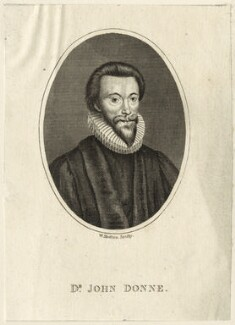
(Skelton)

John Donne was born in 1572, London, England and died on March 31, 1631, London. He was a leading poet of Metaphysical Poets, considered as the preeminent writer of his time, greatest love poet of the English language and cleric in the church of England. He is also noted for his religious verse and treatises. He was in the era of jacobean age. They are many notable works in his name like 'A Valediction: Forbidding Mourning', 'Anniversaries', 'Batter My Heart' 'Biathanatos', 'Death, Be Not Proud', 'Devotions upon Emergent Occasions', 'Holy Sonnets', 'Paradoxes and Problems', 'Pseudo-Martyr', 'Songs and Sonnets', 'The Canonization', etc. His poetry was re-evaluated by T.S. Eliot and other poets in modern times. He also wrote Prose and this a Collection of Letters, 'Letters to severall persons of Honour' in 1651. 

Donne was born of Roman Catholic parents, and his father was a prosperous London merchant. Donne was the third of six children. Donne was four when his father died, and then he was raised by Dr. John Syminges, his stepfather who was a wealthy widower with three children of his own. Donne was educated privately; however, there is no evidence to support the popular claim that he was taught by Jesuits. In 1583, at the age of 11, he began studies at Hart Hall now Hartford college, Oxford he studied there for three years and then at the University of Cambridge for another three years but because he was a Roman Catholic, he didn't want to pursue a degree from the protestant queen Elizabeth. (Pinka) 

Donne's work is often preoccupied with Death, both as a personified force of nature and as a transitional moment in the experience of humanity. His famous Holy Sonnet 10 (Death, be not Proud) gives Donne's most complete view of the nature of death in the universe. Death is an instrument of God to move his people from frail earthly existence to glorified eternity with him. Thus, Donne sees Death as having an unwarranted reputation of terror among humans. 

In his Holy Sonnets first twelve poems can be grouped by subject matter into two series—six on the subject of death and judgment and six on God’s love for humankind and the human obligation to love God and others in return. (Britannica)

T.S. Eliot says that; 

"A thought to Donne was an experience, it modified his sensibility."

'DEATH, BE NOT PROUD':-

This poem is also known as Sonnet 10 and published posthumously. This Poem includes fourteen lines in it. 

Death, be not proud, though some have called thee

Mighty and dreadful, for thou art not so;

For those whom thou think'st thou dost overthrow

Die not, poor Death, nor yet canst thou kill me.

From rest and sleep, which but thy pictures be,

Much pleasure; then from thee much more must flow,

And soonest our best men with thee do go,

Rest of their bones, and soul's delivery.

Thou art slave to fate, chance, kings, and desperate men,

And dost with poison, war, and sickness dwell,

And poppy or charms can make us sleep as well

And better than thy stroke; why swell'st thou then?

One short sleep past, we wake eternally

And death shall be no more; Death, thou shalt die. (Donne)

Poet:- John Donne 

Rhyme Scheme:- ABBA ABBA CDDC EE

Written:- 1609

Published:- 1633

Genre:- Religious Poetry 

'Death, be not Proud' in the first line of the poem one can see that he challenges Death and says that 'Death' don't be so proud of yourself, you are nothing, further in the poem he says that though everyone calls you mighty and fears you, but in reality you are not. Those you take with you do not die, poor death, and you cannot kill me too. The sleep we get every night is actually much more pleasurable and peaceful than your sleep after Death. The people whom you take with you, only the body you take, not their soul. Through this line one can find Metaphysical elements in this poem. 'Death' You are slave, slave to Fate, Kings, Poison, War, and Sickness, You don't have any strong reason for taking us with you, you just want a chance. Poppy (opium) or Charms can give us better sleep than you. In the last lines of the poem he says that okay, we sleep for some time but then what? We wake again and transfer to another body, our soul never dies. So, 'Death' you die not our soul, You die.  

In this poem he described 'Death' as a little thing. Death is nothing in front of us and in front of our sleep. He compares opium and Death and describes that the sleep by the opium is better than sleep by the Death.

MILTON AND DONNE:-

Sir Walter Raleigh made sixty years ago remains undisputed, "As for the great dean of St. Paul's, there is no evidence that Milton was touched by him, or, for that matter, that he had read any of his Poems." There is, however, at least one significant link between the poets which has been overlooked: Milton's verses 'On Time' indicate that he read and was 'touched' by Donne's 'Death, be not Proud.' This point of contact is particularly revealing because it illuminates the 'temperamental antagonism' between Milton and Donne which critics have deduced. 

Further in this article, Frederic B. Tromly described that one reason the link between the two poems has escaped notice is that the clearest evidence for it does not appear either in the fair copy of 'On Time' in Milton's notebook or in the text he printed in the Poems of 1645. There is in the Bodleian Library, however, a manuscript containing a version of the poem in which the conclusion differs from that of the Trinity manuscript and the Poems. The last line of the Bodleian text clearly appropriates the final line of 'Death, be not Proud':

And death shall be no more; Death, thou shalt die.

- Donne 

Where death and Chance, and thou O tyme shall be noe more.

- Bodleian MS (Tromly)

RELATION BETWEEN JOHN DONNE AND 'DEATH':-

In his article ‘I am every dead thing’: John Donne and death by Andrew Dickson he wrote that John Donne’s writings are death-obsessed. Poem after poem is haunted by the theme of mortality and many of his letters and prose works explore the subject. Among the awesome variety of subjects Donne tackled in a tumultuous life, death was one he continually, compulsively returned to. As his famous ‘Nocturnal upon St Lucy’s Day’ phrases it, ‘I … am the grave / Of all that’s nothing. 

In this, the tenth of his so-called ‘Holy Sonnets’, Donne boldly appropriates a verse form associated with love poetry and refocusses it on the figure whom Christians are meant to love more passionately than anyone else – God. 

Further in this article Andrew Dickson described 'Death, be not Proud' in a different way than I described. He described that the address in ‘Death be not proud’ is aggressively personal, imagining Death as if it were a real, flesh-and-blood individual. Again, the argument is vigorously pursued, asserting that the narrator’s Christian belief will save him from death and bring him to eternal life, along with everyone else who believes: Thou art slave to fate, chance, kings, and desperate men, And dost with poison, war, and sickness dwell. (Dickson)

REFLECTION OF 'DEATH' IN DONNE'S OTHER POEMS:-

In Poem 'A Valediction: Forbidding Mourning' By John Donne in first two lines he described about a person who just died and whispered to their soul to go. Here he directly tells about Death without using any metaphor or paradox. 

As virtuous men pass mildly away,

   And whisper to their souls to go,

Whilst some of their sad friends do say

   The breath goes now, and some say, No. (Donne)

In his 'Holy Sonnet: Since she whom I lov'd hath paid her last debt' (Holy Sonnet 17) he told us about his beloved that she paid her last debt means she died and her soul goes to heaven. Through these lines it's clear that he has relation with Death that's true but he also believes in the afterlife and has so many faith in God too. 

Since she whom I lov'd hath paid her last debt

To nature, and to hers, and my good is dead,

And her soul early into heaven ravished,

Wholly in heavenly things my mind is set. (Donne)

WHY ARE HIS MOST POEMS ARE ON 'DEATH'?:- 

In the article, The Concept of Death in John Donne and Sohrab Sepehri:A Comparative Study by Behnam Mirzababazadeh Fomeshi got the point that maybe because of this he was influenced by Death and always tries to write on 'Death'. He wrote that Donne experienced many personal tragedies. He was born into a terror. In 1576 his father died when the son was only four. In 157, his sister Elizabeth died, followed by two more of his sisters, Mary and Katherine, in 1581. Before the future poet was ten years old he had thus experienced the deaths of four of his immediate family. His brother had died of a fever in prison after harboring a Roman Catholic priest, and an uncle, a Jesuit, washanged, castrated, disemboweled, and quartered. Queen Elizabeth's Government, though by contemporary standards tolerant, still uniformly burdened Catholics with harassment and financial penalties. This fact may be one of the underlying reasons for Donne's "religious doubts''. Five of his twelve children died during birth or infancy. Donne endured his wife Ann's miscarriages, and in 1617 her own death at the age of thirty-three (Greenblatt et al, 2006, p. 1261), just a year after he took his first parish job. In his funeral sermon for her, he preached from Lamentations, "I am the man that hath seen affliction". (Fomeshi)

WORKS CITED:-


Words:- 2,465

Image:- 2